
Publications
fascist Comeback
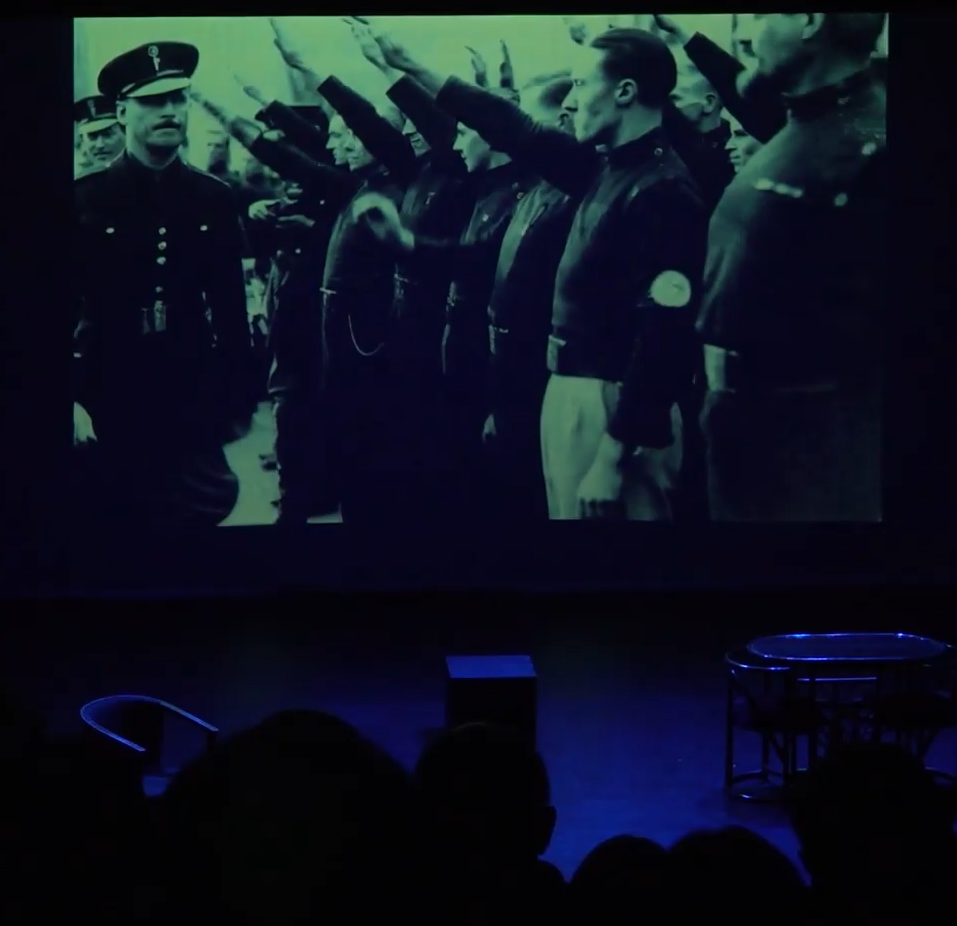
Feb 08, 2025I was offered last year to direct D.R.Hill’s play Draining The Swamp, about the rise of British fascism. Above, a screenshot of the show performed in Hastings, with projections edited by Jeffrey Choy and produced by DRH arts.
-
Since I started Exchange Theatre and Sartre’s The Flies in 2009, up until Noor in 2019, reminding of the dangers of fascism is at the heart of our work. So, Draining the Swamp became so significant to me that I associated Exchange Theatre’s whole manpower to promote and amplify it. We held Q&As in front of school groups, warning how easy it had been and is yet again for the far right to seem appealing… and how vigilant we ought to be today …
We could not imagine how quick a fascist salute would re-appear in the public realm. And the most ironic thing is: do you know how difficult it is to direct a fascist salute ? People who have worked on such material would know: It’s very hard, it’s a heavily loaded symbol, it carries so much history of hatred, it’s not a nice thing to ask actors, nor is it comfortable for them to be doing it. We even had a venue turning down a poster on which Oswald Mosley takes a fascist salute ! “Understandably, we thought, it is uneasy”…
… Well… Suddenly, here we are, a year after rehearsals started on this alarming production, and a fascist salute comes back, without any doubts possible, and not in an underground neo-nazi faction, but by one of the most powerful man on earth, glorified by power and money, railing peoples against each other… and so joyfully and easily executed….
We truly better watch out. Like in this picture, they’re coming to town. How easy will it be to resist or raise our hand ?David Furlong - Artistic director of Exchange Theatre
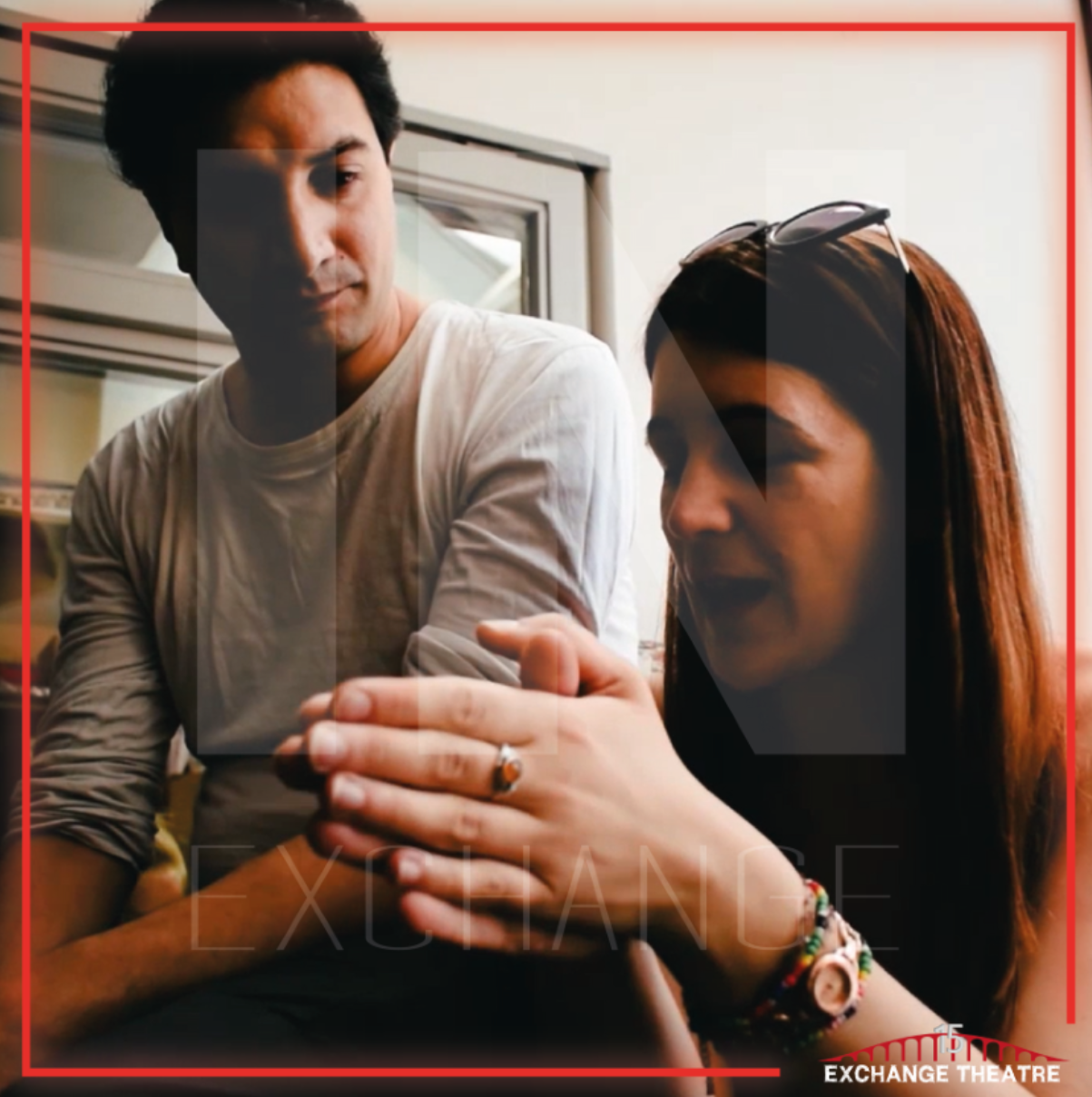
Fanny Dulin and David Furlong on 15yrs of Exchange Theatre by Theatre Bubble
Feb 20, 2022Fanny Dulin and David Furlong are co-artistic directors of Exchange Theatre, who celebrate 15 years of making work. By Tom Bailey at Theatre Bubble.
-
How did Exchange theatre begin?
Fanny Dulin: David and I were already working as actors in the UK doing Tours in Education or language based plays, and some small fringe productions. Very quickly, as foreigners, we felt that our roles and jobs would always be pigeon-holed and that we needed to create our own work. And we felt among our peers a lack of knowledge of plays and theatre from outside the UK. For example, Molière seemed very obscure or misunderstood even to esteemed drama-school trained colleagues, whereas we had learned about Shakespeare and his modernity in our training abroad.
David Furlong: Classics are symbols but beyond the theatrical heritage, there was a gap in international theatre’s presence, in the plays produced, and in the proposed esthetics. So as migrant French speakers, we decided to bring plays from the French language repertoire in English to the UK. Because at the same time, we did feel a sense of entrepreneurship in London that we didn’t find anywhere, because performing arts have always been so well-structured, so much so that it was called ‘the industry’, something unheard of for us and that was fascinating. This gave us faith to start producing our own work.What was the UK theatre industry like 15 years ago compared to now?
David Furlong: There was a paradox because, internationally, UK theatre was represented by Complicité, Cheek by Jowl, Deborah Warner, Katie Mitchell…; British people who explored international theatrical vocabulary and forms were at their peak and European theatre esthetic was starting to influence uk theatre-makers, so we felt a part of something that we thought was happening. But, in the end, to summarise, it was only at major leading venues like the Barbican, the Young Vic and the National… but we did not realise immediately how marginal this was and would remain. When working at low-scale, we found UK theatre to be actually very conservative, oddly divided between physical theatre and ‘straight’ plays, much less multi-cultural or imaginative that we had assumed. The mere ideas of foreign plays was always seen as exotic, so multilingual plays were even more a small niche. Also, some practices in rehearsal rooms were stuck in old traditions and bias. Fortunately, it’s evolved slightly on the place of devising, and how to create work collaboratively. And mostly we found that UK theatre is always a pioneer on the ideas of creating safe spaces in work environment and inclusive ideas. Perhaps because it had so much to fix… but everything all we now put in action within the company in terms of diversity and representation, or in terms of safety, it is certainly thanks to being part of UK theatre.Where it’s not changed unfortunately, if not gotten worse, is that there is still hardly any non-British plays, new writing or classics… And apart from the Arcola, still not one major foreign theatre-maker leading a venue.
What would be a particular highlight of the company’s history to date?
Fanny Dulin: The first one would be when we got a residency for two seasons of bilingual family shows at the French institute. It was a recognition or our work from the institutions of our country of origins. Moreover, it allowed us to get a rehearsal space and office, this was a milestone to become really fully theatre-makers. And one of the highlights is certainly, when after a decade, we decided to produce everything in two languages and did our “Moliere for the 21st century” diptych: The doctor in spite of himself and Misanthrope. The two productions were Offie-nominated for Best Director (Doctor), then Best Production and Best Video Design (Misanthrope). These accolades were very encouraging, after ten years, we finally felt acknowledged as part of the UK theatre industry. But as this all happened at the same time as Brexit, It’s very polarised. It’s like being told “you’re welcome” and “you’re not” both at the same time.Is there anything you wish youhad done differently?
Fanny Dulin: We started producing our shows in two parallel languages only in 2013, and we probably could have come up sooner with this formula !
David Furlong: Otherwise, on a totally idealistic note, I think we would have liked to be more aware of the structural barriers to foreign-born artists rather than finding out about unfairness as we went through them. As migrants, we tried to fit in, we were always very obedient, nice and polite even when we were treated unfairly or patronised, and now that we have the tools to recognise when something wrong happens, it makes me wish I could have flagged it sooner. I think it’s a bit sad to say that the way we operate a real policy of kindness and care within the company, actually comes from being ourselves treated with prejudice.Do you work on other projects outside the company?
David Furlong: Aside from my roles in Exchange Theatre’s shows, I have acted a lot in with renowned companies such as Border Crossings, Theatre Lab, The Faction, playing great parts too, like Macbeth. I have been keeping strong connections with France, performing regularly in street theatre, or on stage in Bordeaux and Paris whenever I can. As a director, I was just getting my foot in some big doors when the pandemic hit and I was Jerwood Assistant director at the Young Vic on Orfeus but the show was cancelled.
Fanny Dulin: Even if not quite outside the company, what’s important with Exchange Theatre is that we now get involved with partner companies, either as co-producers, or by bringing our support to admin or space. The Exchange is very much found in this as well. And, yes, we’re still both actors which is is vital to remain artists and not just permanently seeking funding. I’m also a voice over artist, I have supervised French dubbings for Netflix.How are you celebrating the anniversary?
David Furlong: Each year since 2006, we produced our own theatre festival. In this period of hardship, we had to cancel it for the second year in a row, with great sadness. For this special occasion, we decided to share a documentary we had in store and that was never released. It’s a true insight into our process, a focus on our human values through a unique documentary. It’s called IN Exchange and it’s a true cinematic experience directed by two young graduate film-makers, Marie Loury and Léo-Paul Payen, who followed us through the creation of Misanthrope from production to performance. It’s also a very intimate immersion in the life of a small-scale theatre company in the uk, and the in the bilingual work of migrants in theatre.
Fanny Dulin: We’re also holding an online retrospective of our work the whole summer as a celebration of our values more than our many shows. We’ve worked hard at using our social medias for more than promotion and with a meaningful agenda: we’re sharing videos of many people we’ve worked with through the years, sharing quotes, and championing our collaborators. I think that we create a meaningful human connection beyond working together and we want to show this exchange too. Above all, we can’t wait to be completely out of of social restrictions and gather everybody for a huge sunny picnic in September!What does the future hold for Exchange Theatre?
Fanny Dulin: In the immediate future, our anti-bias family show, THE CAT IN (re)BOOTS is streaming as part of the Edinburgh Fringe, a great show to explain unconscious racism to kids.
David Furlong: And then, also as part of our anniversary, one of my translations, Break of Noon by Paul Claudel which I directed in 2018 at the Finborough, is about to be published by Shearsman Books and Menard Press in a wonderful never-seen-before edition complemented with essays by Susannah York and John Naughton. Also, before the pandemic, we were working hard at getting our work to France too, and we want to keep pursuing this. And thirdly, the covid forced us to become theatre-videos producers in a way, so I want to explore more in this direction by creating other external collaborations as ever.
Fanny Dulin: We also crucially need to get more financial support because the crisis is leaving us in a very delicate position. And I’m also in charge of all our education department, developing languages workshops through dramas for schools, as well as running our amateurs dramatics in French, who are a great dynamic community to support us.
David Furlong: And finally, also we’ll also continue the work we do to facilitate, and amplify the movement Migrants in Theatre, addressing the lack of representation and mis-representation of migrant artists in British theatre.
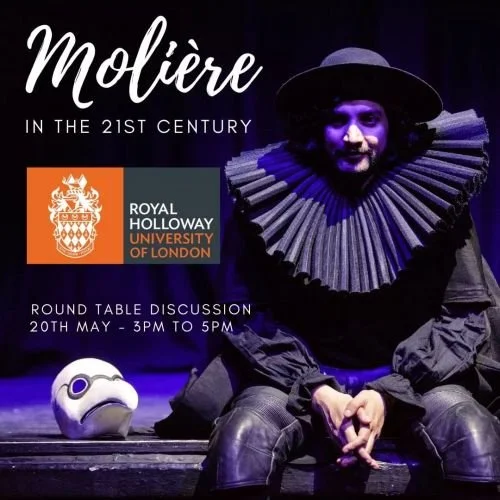
MOLIÈRE in the 21st century
Apr 19, 2022This year is the 400th anniversary of Moliere’s birth and the 350th anniversary of his death. He is still the most performed French playwright performed worldwide. And the company he founded in 1643 is now La comédie Francaise
-
the oldest theatre company and building in the world still active today. Moliere is so important today that French is often called La langue de Moliere.
I am David Furlong, I am an actor and director. I trained in France, at the National theatre, and being from mauritius, and I have grown up speaking French fluently and English as well, I moved to london twenty years ago to pursue my career. I founded Exchange theatre 15 years ago, a company with which I translated and produced major French playwrights such as Jean-Paul Sartre, Paul Claudel, but it took us our whole first ten years before we dared tackle Moliere, despite him being the epitomy of French theatre in the world.
Since we started in 2016 with The Doctor in spite of himself, we haven’t really stopped at all. We produced Misanthrope in 2018, and Dom Juan this year, which some of you came to see, and I’m very grateful about. These were our most successful shows and they’re the ones who brought us recognition and accolade from the press and from our peers.
My first encounter with Moliere was watching television in France where I was growing up, and especially the movie l’Avare, with Louis de Funes. A tv adaptation of The miser. He harboured a large ruff, (which is called a Fraise like the fruit in French making it even more funny). But the aethetic choices at the time, despite the production being from 1980, were incredibly classic. And even the comedy genius of De Funes did not leave a mark.
My second encounter with Moliere was in secondary school, when at thirteen, one of our teacher gave us a scene of The Doctor in spite of himself to read outloud. Of course, with no indication of how to bring life off the page, the reading was very flat and contributed in our class, like for generations of pupils at school, in thinking that Moliere was an old dusty revered playwright for classicists.
Now, 30 years later, I believe Moliere has always been to this day one of the most visionary, modern, provocative playwright. So I’m going to take you on a journey to follow how I went from a schoolboy from the 1990’s to a theatre-maker lobbying and championing Moliere’s work for the 21st century.
First, I’d like to give you a little biography of Moliere which will not be a list of dates but rather some story-telling around the most important elements of his life which seem to be neglected most of the time to understand his work and his legacy better.
Born in Paris in 1622, he was the son of a rich tapestry maker who was supplying the King himself, and the court at the time, so he grew up in a very comfortable household, with his fathet being a rich busines man and he went to school, learnt to write, studied greek ancient philosophers and mythology, and he was a very educated man for his time.
And in his spare time, Moliere as a child, frequently went to see the Italian Commedia Dell’Arte companies who were residing in Paris. Whilst the French theatre was totally dominated by Tragedy, considered a noble genre, Moliere was fascinated by Italian comedies which were so physical, using stock characters and performed on Trestles, in the streets.
He was probably destined to be be also a tapestry seller, but he met the Béjart family, and started acting. Aged 20, with Madeleine Béjart, they founded l’Illustre Theatre 1643 and performed in paris, before educated audience, in theatres who are still legendary today like L’Hotel de bourgogne, which is the location of Act 1 in Cyrano de Bergerac, but the company went bankrupt in two years. Jean-Baptiste even went to prison at the time for not paying his lenders. And his father paid for his release.
So then, the company left paris and travelled the provinces for twelve years ! From 1646 to 1658, in trailers, they toured towns and villages of France. And that’s when he truly learnt his craft and became not only a playwright, but more than anything a theatre-maker in the most contemporary sense of the words. He acted, wrote, directed, casted, and was managing a touring company. And of course, touring on trestles, in villages, he changed radically and started writing comedies, which we could even call silly comedies. They were the first French-speaking farces inspired by Commedia Dell Arte. The few which remain today are l’Etourdi, La jalousie du Barbouillé and they mostly consist of a peasant chasing peasant girl… and they were written by a certain Moliere. They were also using laughter to criticize the flaws of the time, a bit like comedy sketch shows can do today on television, it’s quite a similar aim: to entertain and be a bit critical, funny and clever about the time we live in.
But the success over those ten years grew into something on a national scale which nowadays will be called a buzz ! At a time when of course, there were not the immediacy of social medias, still the phenomenon is quite comparable. From one village, to the next, people would rave about this company they had seen performed in the previous place and that they were on their way and everywhere people were waiting with anticipation for the company of Moliere, so much so that by the end of these 10 years, the word had gone out in paris and at the court that Moliere was a National star,and a genius of comedy.
In 1658, he performed Le Docteur Amoureux, The Doctor in Love and for the King Louis the 15th and the success was phenomenal. In the meantime, during these ten years, comedy had changed status a little with the Italians acquiring some buildings, one of them being the building which had ruined Moliere ten years earlier. So, as the first French-speaking comedy company in Paris Moliere earned the King’s protection and gave the company a home. Le theatre du Petit Bourbon.
Now, at this point Moliere immediately started writing more ambitious comedies, and specialists today all agree that Moliere is one of the first world playwright who elevated comedy from farces and entertainment to an intellectual artform. The school of wives, L’école des femmes, was his first great success, criticizing misogyny, and was followed by Tartuffe, criticizing bigotry, and which got banned for 5-years. Dom Juan as a disguise to criticize bigotry even further, hidden behind the mask of a womanizer.
Moliere constantly switched from philosophical plays which were considered pretentious plays at the time to more trivial very funny farces.
So going back to my introduction, what is the misunderstanding that makes Moliere seem boring for a mainstream audience and for the 13 year old me. Well it’s precisely the stillness of the inherited classicism imposed on him. As we have seen, influenced by Italian comedies and trestle touring, Moliere is everything but still. His theatre is of hybridity, says Prof Nick Hammond from University of Cambridge.
Consider that the misunderstanding might even be in naming him a playwright, when he was a total theatre-maker: Moliere’s theatre is everything but ‘textual’, Moliere was an actor his work is very oral. And this hybridity translates today through the artists making his work happen. Of course the academics give us the context and the grounds on which to build upon. But theatre-makers like me can look at a script and consider what got lost in the transcription of the plays over the four centuries. For instance, none of the machinery that Moliere directed and incorporated as part as what we're spectacular shows were ever written in the scripts and when you look at them with a director's eye. It's impossible to imagine the end of Dom Juan without special effects for example.
The same applies to some of the lines. When you look at the script with a performer's perspective, you can understand that the words on the page were chosen amongst all the probable versions he performed and quite possibly improvised. Whenever you read the character of Sganarelle, whether in doctor in spite of himself, or in Dom Juan, the part was performed by Moliere himself, and sometimes, it seems that it’s more of list of talking points rather than a monologue.
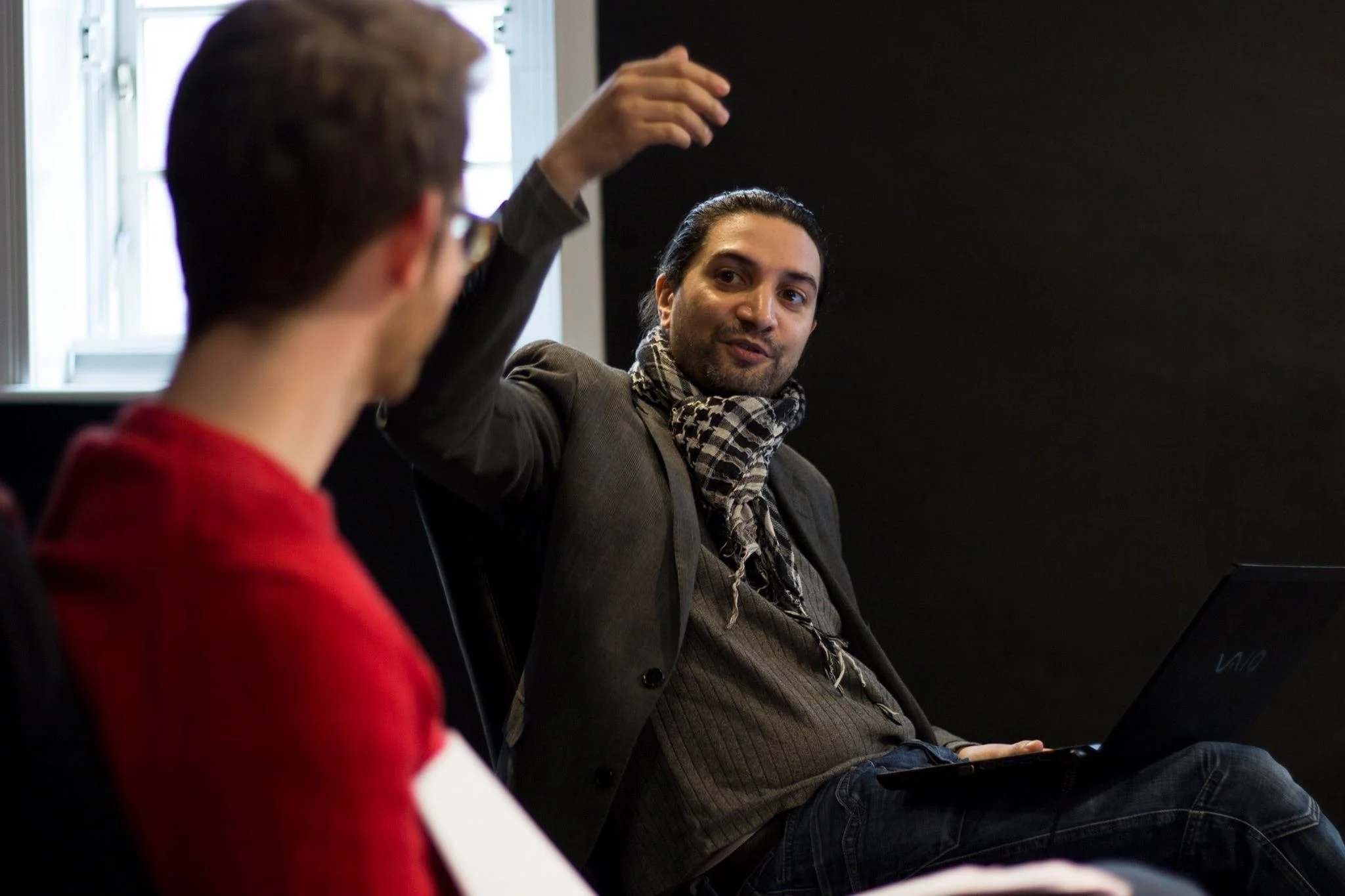
making Bilingual theatre
Jul 12, 2021There is more to international theatre production that academically accurate translations of the script. Artistic Director of Exchange Theatre, David Furlong talks to Mobius about their experience of writing and producing truly bilingual theatre.
-
Not only do purely linguistic tranlastions limit the meaning and purpose of a play but they can miss the point entirely. Here David talks of the importance of understanding the language and cultures fully as well as the discovering he and his team have made on the journey to creating a bilingual theatre company.You can watch the company’s documentary IN Exchange now as part of Living Record to learn more about their practice and work.
At Exchange Theatre, we were always multilingual but it took us half of our company’s life to become a truly bilingual theatre company and another half to be seen as such. Bilingual theatre is so vital when working on a show that isn’t in its original tongue. Often when performances are ‘translated’ into English they are adaptations, and they make the plays more British. But an adaptation of a play takes it away from the original.
The initial purpose of Exchange Theatre was to produce faithful translations of French-speaking plays. And it quickly became apparent that meant not only seeking the translations, seldom found, but actually creating them ourselves, for which our bilingualism is essential. Translation was somehow part of me. I am from Mauritius and I grew up speaking French at home and English at school. Therefore I developed a natural inclination to translate French plays into English or English works into French.
With Exchange Theatre, we started a real process which led us to become a fully bilingual theatre company, producing our plays in double parallel productions in two languages, with fully bilingual casts. It was a journey filled with learning and experimentation.
The lessons of translations
Over the first seven years of the company, we experimented with several different translating approaches.
In 2006, we found our first translation of Paul Claudel’s The Exchange by a retired university professor in Wisconsin. When we received her translation, written in the 70’s, she mentioned in a letter that the translation was probably a bit dated and so I ended up having to re-write some of it myself as we could not afford a scholar. The translation was later praised by an esteemed professor, which was empowering, and so I decided to carry on. In the first four years of the company I re-adapted an old Sartre translation by Stuart Gilbert and I translated two Georges Feydeau farces, in collaboration with my company co-director Fanny Dulin.
When we were working on Xavier Durringer’s translation of Bal Trap. I approached Mark Ravenhill who had previously translated one of Durringer’s plays to see if he would do it again. When he answered “I don’t speak French”, I was confused as his translation had been performed at the Royal Court. Then he explained that his job was just to rewrite from a literal translation. Playwrights are so important in the UK that their credit as a translator can be crucial to the commercial success of a show. It’s a great way of having David Harrower’s version of a Strindberg play or Tony Kushner’s new translation of Brecht. But however good those productions and playwrights are, they are not Strindberg or Brecht, they take on their own new style so the plays are not pure translations. And it isn’t important whether or not to anglicise the play, that’s not the point.
So we started to understand what we were doing differently and realised that maybe the success of our work was based on its bilingualism; because we were looking at pure linguistically and culturally sensitive translations not adaptations. In changing the language we still want poetic licenses to be kept and rhythm to be close to the original. The rhythm is very important. There’s a rhythm to the thought, the delivery, the sound of the language. With the company, we found that this rhythm can also be translated, we find equivalences that work. It’s important to serve the intentions of the original playwright as best possible.
In 2008, we workshopped our translation of Bal Trapwith actors in the rehearsal room to hear the spirit of the work. With actors, we reached deeper into the language of the characters. We were very concerned by the fidelity to the original, but sometimes the translation found by an actor or writer who understands both the languages and the cultures behind the play feels so real: It’s not faithful in a technical way, but it feels true to what the original line’s real meaning.
As we were translating a Feydeau farce for example, we looked into an existing old published translation of Madame’s Late Mother where a character said in the original old French “Je ne trouvais pas de lanternes”, Lanterne literally means light, like cabs have on their rooftop, so the translation should have been “I couldn’t find a cab”. But the translator, a university professor Emerita, translated literally the words he found in his dictionary and made the character say in his version “I couldn’t find a light” which makes no sense at all in the context. Theatre translators can’t be just academics. To be literal would be to miss the point and often the joke.
From translating bilingually to producing bilinguallyAfter our first five years, in 2011, we were invited to create work at the French Institute for young audiences. This time, our audience too was bilingual and it allowed us to explore the coexistence of languages on stage, to actually create bilingual work from scratch, not just translate existing pieces.
After twelve shows, in 2013, we decided to try the formula with full length plays for a broader audience. We first produced our play with two parallel casts. Un Air de Famille and A Family Affair: One in French, one in English. The observations we made looking at both similarities and differences between each cast were very interesting and informative. But the two productions were a bit too different. Because here what’s fascinating:
- English language creates short sentences.
- French language makes longer phrases.
- At the same time French sentences are sharper in their delivery, more direct.
- At the same time English sentences have more nuances, and a bit more of a wave to it.What we want is to combine the two in both performances; have a French performance which grabs the nuanced quality of the English and an English show which takes advantage of the newly-found straight-forwardness of the French. This is unique and a work of passion.
From 2016, when we started our Moliere Diptych we decided to do only double parallel productions of the same plays both in English and French. The idea was to apply the strength of our bilingualism, everything we have understood when translating, to our whole process and create a production which was connected to the performers’ lived experiences of their languages, to the point that an audience can see both plays and feel the same!
This makes us reach for very singular profiles of actors; we only cast bilingual people who have a commanding use of both languages, so they’re also really interesting people. Not only bilingual, they generally have parents of two different origins, who grew up being multilingual, in a place which isn’t their parent’s culture.ostly, they are third-culture people.
They also bring a great variety of identities to the piece. It’s not related so much to the French identity than the French-speaking world and the language we have in common. It’s refreshing to see an Iranian or an Algerian female-lead ! It simply reflects better the time we live in! The best reward I got from the audience and even the cast members, was a feedback from the experience: they said that as bicultural people, they finally found some work in which they felt represented.
Black Lives Matter
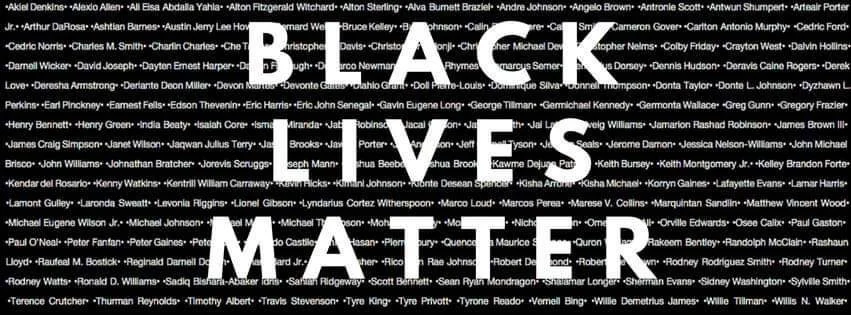
Jun 14, 2020The world is hopefully going through a revolution. In memory of George Floyd in the US to Adama Traore in France, we mourn the neverending list of the victims of systemic racism in history and join our voice to say that BLACK LIVES MATTER.
-
It is not enough to be quietly non-racist, it is time to be actively anti-racist. There is more than one way to show Love and Support and help make CHANGE happen. Some are posting on social media. Some are protesting in the streets. Some are donating silently. Some are educating themselves. Some are having tough conversations with friends & family. A revolution has many lanes – be kind to yourself and to others who are traveling in the same direction. Our way has always been sharing, starting with how we educated and questioned ourselves:
Read, watch and share:
- Watch I Am Not Your Negro by Raoul Peck, from James Baldwin with Samuel L. Jackson’s voice, currently on youtube, and everything available on Martin Luther King and Malcolm X on Youtube and Netflix.
- Read Frantz Fanon, available to download free online.
- Read Race and Class In The Ruins Of Empire by Akala and Why I’m No Longer Talking To White People About Race by Reni Eddo-Lodge (both approx £4 online).
- Many other anti-racism resources in this shared document.
- Theatre companies championing black voices: Blacktress UK, Talawa.
Our founder is mixed and shares experiences of racism, though we acknowledge our privilege, and made a conscious choice in 2016 to change how we cast/recruit to offer opportunities to people of colour at all possible positions available. Only 2016:
“When you have an all white producing team, CHANGE IT. When you have an all white creative team, CHANGE IT. When you have an all white staff at your organisation, CHANGE IT. When you have an all white board, CHANGE IT. When you’re pitching a narrative steeped in ethnic culture with an ALL WHITE TEAM - DON’T! JUST DON’T. When you have an only white ANYTHING, CHANGE IT. And by CHANGE IT, we don’t mean adding one of us so that it ticks a box. We are talking about REAL CHANGE.” (Warrem Adams -Motown choreographer)

Jan 31, 2020brexit day
We are Exchange Theatre.
We are immigrants from Europe, France, Mauritius and the rest of the world and we chose London 14 years ago to develop our theatre.
-
The company’s logo is a bridge. It represents the one we built across the channel, and then, ever since, the conversation we always create between people of any origins, between cultures of any continents, between past and present.
And we owe much of our practice of a generous and inclusive theatre, and all the very holistic notions that we have put in our creative practice, to British theatre-makers leading the way.
In no other European capital than London could we have developed like we have.
For more than a decade, we have been bringing more than forty major unknown European plays to the British audience.
- On the day of the Brexit vote, we were working on a workshop on multilingualism, with twelve European nationalities, organised by international UK company Border Crossings (with which we are working now on The Great Experiment and celebrates their 25th year today! Happy Birthday). That day, we were all stunned, but “we kept calm and carried on” mixing Danish and Greek languages in our work. But the feeling was really that we were not welcome here….
- However, since 2006, our company have grown so much in recognition. We have had the most healthy conversations and relationships ever with a number of collaborating Uk companies and theatres. The offies has nominated us for Best Director, Best production, Best multimedia design and Best Producer four years in a row. We received fundings, support from institutions, built a relationship with the corporate world.These two opposing signals are very hard to process and make sense of, especially when the general status quo seems to ask to ‘take a side’.
So we are not just foreigners working in the Uk, on the contrary, we belong here. We may not be citizens from the UK but the work we do is.
And so is the work of many friends and practitioners we encountered here, who are Italians, Greeks, Polish, Spanish, Portuguese, Czech, Bulgarians, French and many more, outside of Europe too, and you know who you are. Our/Their response is culture, education, diversity, hard work. Our/their work will continue building cultural bridges, and closing gaps, and continue contribute to the cultural landscape of what is now our country. We’re story-tellers, we can write a different narrative with artistic values, the sense of the other and a real Exchange.
Our work does not need “settled” status, just like we shouldn’t need it.
The Uk made us the theatre-makers and the company we are today.
And that is a British European theatre company.
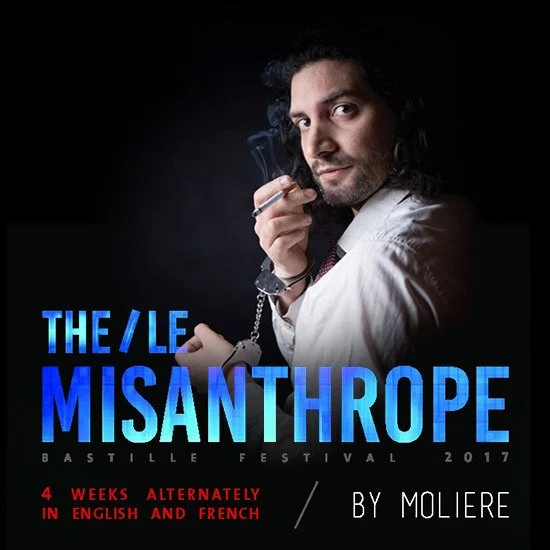
Misanthrope Programme Interview
Jun 13, 2018Tell me about the piece and your vision for it.
The Misanthrope might be the most famous and reverred Moliere play in the world. It was written in parallel to The Doctor in Spite of Himself
-
which we produced last year to a public and critical success. It’s a logical step for Exchange Theatre to pursue our work on Moliere for the 21st century by choosing the Misanthrope. Last year’s play (nominated for a Best directing award) was a farce and an invitation to love and laugh, the next one is a deeper truth seeking comedy, written surprisingly at the same time as a response to the censorship that Moliere went through on previous plays. When The Doctor treated falseness in a satirical way, The Misanthrope confronts the same themes head on. And whilst Sganarelle, the doctor was a buffoon, Alceste, the misanthrope is a deep thinker through whom Moliere adresses the same issues, reacting to the false critics and the moral injustice.
Alceste is an honourable and outspoken man, in love with Célimene, a bright but slightly vain socialite. Tormented by a trial, he confides to his friend Philinte about his love and how he despises society’s complacency. His complicated love-life is then challenged even more when he abruptly witnesses the gossips and small talks going on between Célimene and her court.
In a world of permanent fast breaking news and emptiness, Alceste remains the most loyal man, but he lacks only one virtue: indulgence for other’s behaviours. His search for genuineness against hypocrisy, interests and treachery is tormenting him and as if it could not get worse, he is in love with CÉLIMÈNE, a free spirit who entertains the surrounding vacuity, and makes it her business. For our time of ‘alternative facts’, the play finds unanticipated echo in the world today, transforming the 17th century society salon into a contemporary newsroom. It’s Moliere vs Fake news !Did you have initial ideas about casting and what you wanted actors to bring to the piece?
The fact that we are producing a double parallel production of the same play both in English and French makes us reach for very singular profiles of actors: we only cast bilingual people who have a commanding use of both languages, so they’re also really interesting people who generally have parents of two different origines, who grew up being multi-lingual, in a place which isn’t their parent’s culture, mostly. They fit a recently-named group of people called third-culture people and they bring a great variety of identity to the piece. It’s refreshing to finally see an Iranian Célimene, or a Mauritian Alceste rather than a usual white cast. It also simply reflects better the time we live in !
Also, as a former actor, I also put the performer’s imagination and input at the centre of my work as a director. So in auditions, I’m looking for people eager to explore and have fun. I am not interested only in an ‘auteur'istic approach to directing a piece. I stimulate my actors to be a strength of proposition, to get them to own the piece and their characters. I inherit this from years of acting as a street theatre performer in France where you have to really create bigger-than-life characters with no room for subtle psychology. So when I went back to indoor theatre, I mixed the two layers in how I direct my actors. This leads to great surprises in rehearsals and to original devised scenes, included in the play unknown to Molière himself and humbly completing his heritage.
What do you hope the audience will take away from the production?
The vocation of the company is to translate major French-speaking plays that are too rare. The language of the play, of course, but also its spirit. For Le Misanthrope, there are actually more productions but they’re always adaptations rather than Moilere’s play: Ranjit Bolt wrote his own take on it, Martin Crimp’s version was in the West-End with Keira Knightley a few years ago and so on… Playwrights are so important in the Uk that their credit as a translator is crucial to the commercial success of a show. It certainly can be a great way of having David Harrower’s version of a Strindberg play or Tony Kushner’s new translation of Brecht. But however good those productions and playwrights are, they are not Strindberg or Brecht or Moliere’s. They have their adaptor’s style so the plays are not real translations, and they just make the plays more British.
So for us, It’s about producing these revivals with real translations, just like what Cheek by Jowl does with Shakespeare. And it’s not important whether to anglicise the play or not. It’s more about the universality of Moliere’s ideas. We do use a contemporary imagery suited to a 2017 audience, in order to bring out all its modernity.
Have rehearsals altered your initial thoughts, at all?
Ahead of rehearsals, Research and Developments on the piece have actually confirmed some intuitions beyond what I thought I could do. I knew our version would somehow echo the current trend to make everything public through social networks. And as I don’t really believe in my ideas until they’ve been tried, I doubted some of them as if they were just gimmicks. But the tangibility of Moliere’s situation is astonishing, he speaks about such concrete and universal problems that the very modern and connected situations I tried to apply really lifted the actuality of the play. It even took us to the point of finding some more cutting-edge situation than what I initially imagined ! I came to a scene with what I though was a very modern take on it and the scene became very dull and boring, we were unwillingly toning down the 'trashiness’ of it. But by looking at it closely, one of the charcater’s lines reminded me of a very shocking 'snapchat’ video I had seen and I thought ’ My god, this should actually be much more trivial than what I thought’ Moliere is totally ahead of us. You can’t just look at transferring his scenes to modern settings. You have to transfer his exceptionnal events to schocking situations of our world. Today, people do go crazy over their webcams and facebook live just like what he imagined for some his characters, they just did not do it to thousand of viewers. So, the production took naturally the direction of a world of medias, advertising and videos, just by following Moliere’s humour and criticism of his times. We just transferred it to the world we live in now and it went further than what I had imagined.
What would you say to encourage people to buy a ticket?
If you are a theatregoer and if you like to be taken on a highly theatrical evening, and rediscover a major classic for the 21st century, Misanthrope is made for you. It’s walking in the footsteps of rare theatre-makers from Europe like Van Hove or Ostermeier and other companies you’d see at the Barbican. And at the same time, if you enjoy the intimacy of a studio theatre, we’ve been working on the Fringe for a decade and we know the sensorial experience of doing theatre for small spaces. We’ve even had a structure built for out set, especially because we investigated how to transform studio theatres and make theatre immersive and very actual. Exchange Theatre also offers a unique work, multilingual, and you can experience both languages if you like Moliere so much, and you want to see it one night and practice your French another night. Last but not leats, the venue, The Drayton Arms theatre is incredibly warm and welcoming, serving great food as part of a theatre-deal, and it’s a guarantee of a great evening.
Finally, any advice for budding directors?
I would advise towards a good permanent ongoing training through all the multiple opportunities available (Young Vic directors program, Living Pictures, Stonecrabs, Tamasha and many more) and a general openness to discover new territories all the time. I’d also tell directors not to consider themselves as 'auteur’ with great ideas because it makes you precious about your ideas. Through training, devising, experimenting, researching and developing my work with others, my work finally reached a shape of its own, not my vision of it. Most importantly, I’ve learned that whichever good intuition and 'talent’ matter only for the public, for the end-result, but are really not enough. You’re probably talented but no-one really cares about it amongst your collaborators. What matters here is your structure, how you can collaborate, your intelligence in dealing with all the talents that are contributing to your work as a director.
Jun 13, 2018Misanthrope ENTRETIEN EN FRANCAIS
Parlez-moi de la pièce et de votre vision.
Le Misanthrope est peut-être la pièce de Molière la plus célèbre et la plus vénérée au monde. Elle a été écrite en parallèle au Médecin malgré lui
-
que nous avons produit l'an dernier recevant un succès public et critique, et c'est une suite logique pour Exchange Theatre de poursuivre notre travail sur “Molière pour le 21ème siècle” en choisissant le Misanthrope. Le Médecin (nominée pour le prix de la meilleure mise en scène) était une farce et une invitation à l'amour et au rire, la suivante est une comédie plus profonde sur la recherche de la vérité, écrite étonnamment au meme moment, ainsi qu'une réponse à la censure que Molière a subie lors des précédents pièces. Quand Le Docteur traitait la fausseté de manière satirique, Le Misanthrope adresse plus frontalement les mêmes thèmes. Et tandis que Sganarelle, le médecin était un bouffon, Alceste, le misanthrope est un penseur profond à travers lequel Molière aborde les mêmes problèmes, réagissant aux fausses critiques et à l'injustice morale.
Alceste est un homme honorable et franc, amoureux de Célimène, une mondaine brillante mais un peu vaniteuse. Tourmenté par un procès, il se confie à son ami Philinte sur son amour et comme il méprise la complaisance de la société. Sa vie sentimentale compliquée est alors encore plus remise en question lorsqu'il assiste brusquement aux commérages et bavardages entre Célimene et sa cour. Dans un monde d'actualités permanentes et de vide, Alceste reste l'homme le plus fidèle, mais il ne lui manque qu'une seule vertu : l'indulgence pour les comportements des autres. Sa recherche d'authenticité contre l'hypocrisie, les intérêts et la trahison le tourmente et comme si cela ne pouvait empirer, il est amoureux de CÉLIMÈNE, un esprit libre qui entretient la vacuité environnante, et en fait son affaire. À notre époque des « faits alternatifs », la pièce trouve un écho inattendu dans le monde d'aujourd'hui, transformant le salon mondain du XVIIe siècle en salle de presse contemporaine. C'est Molière contre les Fake news !
Aviez-vous des idées initiales sur le casting et ce que vous vouliez que les acteurs apportent à la pièce ?Le fait que nous produisions une double production parallèle de la même pièce à la fois en anglais et en français nous fait toucher des profils d'acteurs très singuliers : nous ne distribuons que des personnes bilingues qui maîtrisent les deux langues, donc elles sont aussi très intéressantes des gens qui ont généralement des parents de deux origines différentes, qui ont grandi en étant multilingues, dans un endroit qui n'est pas la culture de leurs parents, la plupart du temps. Ils correspondent à un groupe récemment nommé de personnes appelées personnes de la troisième culture et ils apportent une grande variété d'identités à la pièce. C'est rafraîchissant de voir enfin une iranienne Célimene, ou une mauricienne Alceste plutôt qu'un casting blanc habituel. Il reflète aussi simplement mieux l'époque dans laquelle nous vivons ! De plus, en tant qu'acteur de formation, j'ai également mis l'imagination et l'apport de l'interprète au centre de mon travail de metteur en scène. Donc, dans les auditions, je recherche des personnes désireuses d'explorer et de s'amuser. Je ne m'intéresse pas seulement à une approche d’« auteur » de la mise en scène d'une pièce. Je stimule mes comédiens pour qu'ils soient force de proposition, pour qu'ils s'approprient la pièce et leurs personnages. J'ai hérité de cela des années passées à jouer dans le théâtre de rue en France, où il faut vraiment créer des personnages plus grands que nature sans laisser de place à la psychologie subtile. Alors quand je suis retourné au théâtre en salle, j'ai mélangé les deux couches dans la façon dont je dirige mes acteurs. Cela donne lieu à de grandes surprises dans les répétitions et à des scènes originales imaginées, inscrites dans la pièce à l'insu de Molière lui-même et complétant humblement son héritage.
Qu'espérez-vous que le public retiendra de la production ?
La vocation de la compagnie est de traduire de grandes pièces francophones trop rares. Le langage de la pièce, bien sûr, mais aussi son esprit. Pour Le Misanthrope, il y a effectivement plus de productions mais ce sont toujours des adaptations plutôt que la pièce de Moilere : Ranjit Bolt en a écrit sa propre version, la version de Martin Crimp était dans le West-End avec Keira Knightley il y a quelques années etc… sont si importants au Royaume-Uni que leur crédit en tant que traducteur est crucial pour le succès commercial d'une émission. Cela peut certainement être un excellent moyen d'avoir la version de David Harrower d'une pièce de Strindberg ou la nouvelle traduction de Tony Kushner de Brecht. Mais aussi bons que soient ces productions et ces dramaturges, ils ne sont pas Strindberg ou Brecht ou Molière. Ils ont le style de leur adaptateur, donc les pièces ne sont pas de vraies traductions, et ils rendent simplement les pièces plus britanniques.Donc pour nous, il s'agit de produire ces reprises avec de vraies traductions, à l'image de ce que Cheek by Jowl fait avec Shakespeare. Et ce n'est pas important d'angliciser la pièce ou non. Il s'agit plutôt de l'universalité des idées de Molière. Nous utilisons une imagerie contemporaine adaptée à un public 2017, afin d'en faire ressortir toute sa modernité.
Les répétitions ont-elles modifié vos pensées initiales ?
En amont des répétitions, les Recherches et Développements sur la pièce ont effectivement confirmé certaines intuitions au-delà de ce que je pensais pouvoir faire. Je savais que notre version ferait en quelque sorte écho à la tendance actuelle de tout rendre public via les réseaux sociaux. Et comme je ne crois vraiment pas en mes idées tant qu'elles n'ont pas été essayées, j'ai douté de certaines d'entre elles comme si ce n'étaient que des gadgets. Mais la tangibilité de la situation de Molière est étonnante, il parle de problèmes tellement concrets et universels que les situations très modernes et connexes que j'ai essayé d'appliquer ont vraiment relevé l'actualité de la pièce. Cela nous a même amenés à trouver une situation plus pointue que ce que j'imaginais au départ ! Je suis arrivé à une scène avec ce que je pensais être une version très moderne et la scène est devenue très ennuyeuse et ennuyeuse, nous en atténuions involontairement le côté “trash”. Mais en y regardant de plus près, une des répliques du personnage m'a rappelé une vidéo 'snapchat’ très choquante que j'avais vue et je me suis dit 'Mon dieu, ça devrait en fait être bien plus trivial que ce que je pensais’! Molière est totalement en avance sur nous . Vous ne pouvez pas simplement envisager de transférer ses scènes dans des décors modernes. Il faut transposer ses événements exceptionnels dans des situations choquantes de notre monde. Aujourd'hui, les gens deviennent fous sur leurs webcams et facebook live tout comme ce qu'il imaginait pour certains de ses personnages, ils ne l'ont tout simplement pas fait à des milliers de téléspectateurs. Ainsi, la production a pris naturellement la direction d'un monde de médias, de publicité et de vidéos, juste en suivant l'humour et la critique de Molière de son temps. Nous venons de le transférer dans le monde dans lequel nous vivons maintenant et il est allé plus loin que ce que j'avais imaginé.
Que diriez-vous pour inciter les gens à acheter un billet ?
Si vous êtes amateur de théâtre et que vous aimez vous laisser emporter par une soirée très théâtrale, et redécouvrir un grand classique du XXIe siècle, Misanthrope est fait pour vous. C'est marcher sur les traces de rares créateurs de théâtre européens comme Van Hove ou Ostermeier et d'autres compagnies que vous verriez au Barbican. Et en même temps, si vous aimez l'intimité d'un théâtre en studio, nous travaillons sur le Fringe depuis une décennie et nous connaissons l'expérience sensorielle de faire du théâtre pour de petits espaces. Nous avons même fait construire une structure pour le plateau, en particulier parce que nous avons étudié comment transformer les studios de théâtre et rendre le théâtre immersif et très réel. Exchange Theatre propose également une œuvre unique, multilingue, et vous pouvez découvrir les deux langues si vous aimez tant Molière et que vous voulez le voir un soir et pratiquer votre français un autre soir. Enfin, le lieu, le théâtre Drayton Arms est incroyablement chaleureux et accueillant, servant une excellente cuisine dans le cadre d'un contrat de théâtre, et c'est la garantie d'une excellente soirée.
Enfin, un conseil pour les réalisateurs en herbe ?
Je conseillerais vers une bonne formation continue permanente à travers toutes les multiples opportunités disponibles (programme de réalisateurs Young Vic, Living Pictures, Stonecrabs, Tamasha et bien d'autres) et une ouverture générale pour découvrir de nouveaux territoires tout le temps. Je dirais aussi aux réalisateurs de ne pas se considérer comme des « auteurs » avec de grandes idées, car cela vous rend précieux pour vos idées. Grâce à la formation, à la conception, à l'expérimentation, à la recherche et au développement de mon travail avec d'autres, mon travail a finalement pris une forme qui lui est propre, pas ma vision de celui-ci. Plus important encore, j'ai appris que la bonne intuition et le “talent” comptent uniquement pour le public, pour le résultat final, mais ne suffisent vraiment pas. Vous avez probablement du talent mais personne ne s'en soucie vraiment parmi vos collaborateurs. Ce qui compte ici, c'est votre structure, la façon dont vous pouvez collaborer, votre intelligence face à tous les talents qui contribuent à votre travail de metteur en scene.
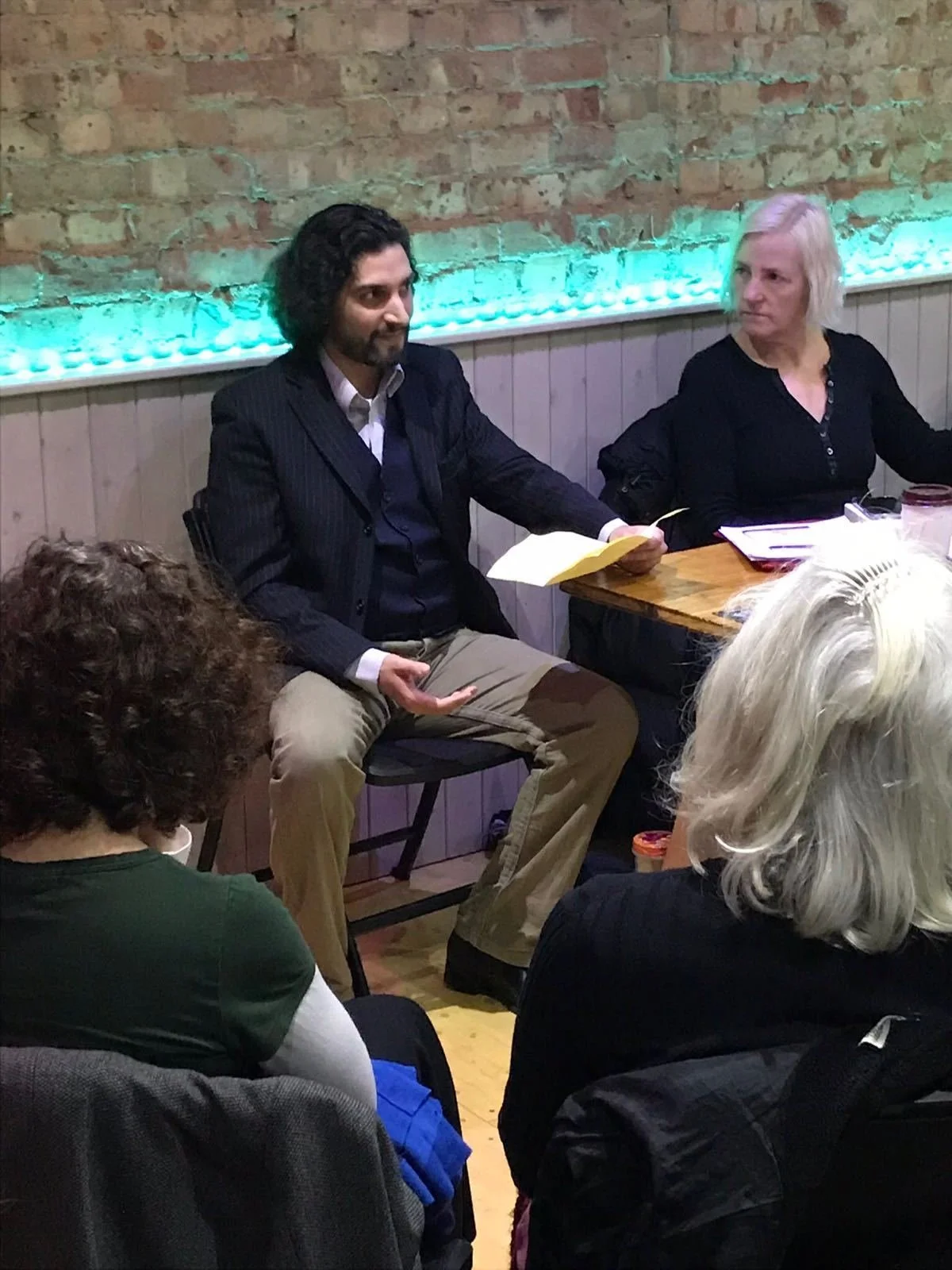
Feb 05, 2018Brexit is happening in the arts too
David Furlong’s talk by invitation from Equity S&SE Branch at the Young Vic Theatre.
“Thank you very much for inviting me today. Interestingly, I was invited almost exactly ten years
-
ago to talk about my work as an emerging director and company at the West and South West Branch.
I remember talking about the work that was driving my company at the beginning: we set off to translate major and unknown French-speaking plays for a London audience. The sort of plays that tour nationally every year in a different production, or whose authors are internationally in general knowledge. Victor Hugo for example, or 20th century symbolist Paul Claudel… the French TS Eliot… ? Claudel is huge across the channel. Unknown here. We premiered his cult play The Exchange in 2006, and I’m very proud to announce that we are invited by the Finborough Theatre to produce another one of his play, BREAK OF NOON, to celebrate Claudel’s 150th birthday and as part of the 150th year of the theatre.
When I was a young actor working on the London Fringe, doing my Shakespeare, my new writings pieces, and whenever I talked about French theatre to my fellow colleagues there was either a big blank in conversations, or a total misconception of what it is. Seen as terribly classical, Moliere was reduced as period farces, excluding all his depth, and confused with Commedia Dell'Arte… ! Although, Italians were not better known: Pirandello, Dario Fo, even Goldoni are just as obscure as Spanish golden Age of Comedia and I only encountered puzzled faces when mentionning Calderon. I had trained in France and I had learned not only about Shakespeare but also Marlowe, Wordsworth, Kipling, Dahl, Pasolini, Goethe… I thought there was something terribly missing there. So, because I couldn’t right the wrongs for the whole of Europe and because I trained in France and was the most knowledgeable for it, I set up my company in order to take a niche of bringing French theatre to the Uk and do it justice. Since then, we’ve translated for the first time plays by Feydeau, Sartre and Claudel among the most famous ones, over ten years. Little did I know when I started that there would be so much to do, so much space in the niche.
Our primary objective was to make some rare or unknown texts discovered. It mostly consists of a translation work led by our team and for which our bilingualism is essential. Translation is somehow part of me. I am from Mauritius and I grew up speaking French at home and English at school. Therefore I developed a natural inclination to translate French plays into English or English works into French. With Exchange Theatre, I translated Sartre, Georges Feydeau, Durringer and we started having a real process.
First, what’s important is to understand a language from the inside and then present it in a way that is not a version. Because we want poetic licenses to be kept or rythm to be more close to the original. It’s important to serve the intentions of the original playwright as best possible. What is interesting is the layers of translation that we to go through. Everything we say has so much history and echoes and nuances in our personal existence. And for us, translation needs to be very active, not literal, and have much to do with what happens.
At the same time, when we start working on translations, our main concern is that we don’t want to do a re-interpretation. That could come later maybe, depending on the production process. Translation simply takes into account accurately the reality of both languages and cultures. We ask ourselves, how would the playwright have written the play if he/she spoke English?
The rhythm is very important. There’s a rhythm to the thought, the delivery, the sound of the language. With the company, we found that this rhythm can also be translated. We find equivalences that work. We workshop the play with actors in the rehearsal room and get the spirit of the work. With actors, we reach deeper into the language of the characters. Of course there is always a language consultant to validate the grammar or the vocabulary. And I am also very concerned by the fidelity to the original.
But sometimes the translation found by an actor feels so real: It’s not faithful in a technical way, but it feels true to what the original line feels like. Drama must, in order to communicate, have both a technical surface level, and a deeper feeling level.And we think that the feeling of a play is transferable if the translators have a really good knowledge of both languages and it is essential that they has a very clear understanding of the culture behind the play.
Beyond mere translations, we’ve been exploring Multi-lingualism since the founder show of the company. All our shows contain at least 2 spoken languages and subtitles. This reflects the reality of the contemporary world. One of our works back in 2009, The Flies, adapted from French philosopher Jean Paul Sartre, reflected this with French, British, Israeli, Mauritian, Japanese and Greek actors sharing the stage. This created a show that also sounded different from anything you would hear on the London stage. It was quite a unique performance where every one sounded differrently. And in 2010 we entered the French Institute for a two year residency, for which we adapted twelve young audience stories for the stage, by Maupassant, Jules Verne and many more. This is when something started to change. The audience there were generally living in the English speaking world with an English mum and a French dad or even a Spanish parent too, so there was a fluidity in their comprehension of languages that allowed us to play and explore how languages work on stage.
And also this work of passion was taking us far beyond ‘French theatre’ it had a downside: very quickly, we were put in a box. The French company.
Which is ironic because I’m from Mauritius and I have just had a dna test done: turns out that in blood, I’m Irish-Indian. And French speaking. So, after the residency, we decided to embrace that box rather than fight being pigeonholed: Since we now had two audiences, we would create shows produced in paralllel in both english and French.
We first produced a play with two parallel casts. The observations we made here looking at both similarities and differences between each cast were very interesting and informative. One fed the other. This became our process: Since then we produced all our work in both languages, but actually with just one bilingual cast performing both versions. And finally, in 2016, we entered the current phase of the company, by finally doing our first Moliere, the epitomy of our ‘box’, after 10 years of doing French plays.
The week of the Brexit vote, I voted IN as a commonwealth citizen, feeling part of this country, as an artist and as a dad; the day after I was being told that I was a foreigner again; and two days after, I was nominated for an Offie as best director. A lot of conflicting signals.This is the last part and it might be the most interesting thing, all the shows now have actors who have a native command of both languages. They are intimately living as bridges between the cultures and the countries. In out last show, we had a French-British actor, an Italian-French-English actor and a Iranian-French-American actress. They are all third culture kids. It’s an actual demographic category of people, who may very well be your own children, and who are growing up in a different place and culture than their parent’s.
And, I would like to finish by a provocation:
Brexit is happening in the art too. Despite us thinking that as artists, we are left-wing tolerant thinkers, as a foreigner, I can feel it happening. About a year ago, I was here, at the Young Vic at a conversation about European influences on theatre design. At one point, someone suggested that we might not need ‘imports’ from outside the UK, that we had better encourage in-land talents rather than (I quote!) ‘go and spend two days at the Berlin Schaubune and come back to tell us how it’s done’… I wasn’t so offended by the over-simplification in that statement, but what was worrying was the general silent nod in the room. No one challenged it. Everyone seemed to agree ! Despite our politically-correct stand on Brexit, in truth this argument follows the same line of leavers: it’s seeing people as competitive merchandise rather than enriching exchange. We need to change the conversation and bring new notions to the table. Migration is not a problem, it’s the answer.
I have a third-culture kid daughter, she’s 6, growing up bilingual as a Londoner with a very fluid identity. And maybe so are your children. I’m totally settled in the UK now, after 14 years. People like me and her belong here and yet, we don’t actually fit any boxes in the equality monitoring forms. People like us are many, more and more numerous, more and more mixed, and totally under-represented.
These people are the future.There is a lot, there is so much done and still to do for Bamers, for sexual and gender equalities, for all minorities and fluid identities but what about the people who literally can’t tick the boxes on the form.
The company I started has a tagline: ‘theatre beyond borders’, ok, we’ve done that now, but now that we’ve crossed the lines, Is it not time that not we go beyond the boxes?”- Though, I disagree with the assumptions than Europeans are more culturally aware than the British, I have many foreign friends, not in the arts, who are completely clueless about our heritage and don’t anything about Noel Coward. I have a French friend who telling me off permanently about Brexit. We are as much embarassed about it. It’s a trauma on both sides. What do you think of this ?
- David: I think it’s true that ‘general knowledge’ is centered towards our own culture in general and not only in the UK. My concern was about artists and the education they receive. I’m not expecting anyone to be aware of foreign theatre, I’m just worried if theatre makers are not educated to learn from other culture’s theatre.
And I hope you don’t feel I’m telling you off. On the contrary, you know, I’ve developed as an artist in the UK. Uk artists are some of the best at creating process of dialogues. (Probably because society is so codified, and it’s so hard to talk across the layers of society so they got a lot better and pragmatic at facilitating respectful ways of speaking). So every tools I use to create empathy and conversations in my rehearsal rooms are tools I learnt here with Uk practitionners. So the answer is there, we have it. The answer is to use those tools to keep the conversation going about this ‘trauma’ that we’re talking about: whichever side we’re on, however confused or frustrated we are, we as artists have all the tools to talk about it better and in a beneficial way. Look at Devoted and Disgruntled, listen to Declan Donnellan talk about Empathy and how we performing artists, and actors are the best equipped to understand it. Let’s spread our message as artists. We’re very good at doing it in our rehearsal rooms and we have to use it offstage to prevent each sides of the debate from closing in.
Recently, there David Hare wrote a guardian piece, followed by Michael Billington, about how European theatre is invading the English tradition and for me it’s comparable to women who criticised the #metoo movement, it’s counter-productive, it doesn’t go the right way. I’m not saying they haven’t got a point, but it’s not the right time to follow a conservative agenda which can be more harmful in the long term. It’s time to change this tendency to oppose tradition with novelty. The latter is always rooted in the other. It has to be a dialogue. And the parallels between Brexit, metoo, and the migrant crisis (which is not real, the migrant are 1% of population), are not by chance, they’re all agendas of closures and not exchanging anymore, and they’re all happening at the same time.
- I’ve been a foreigner in this coutry for 40 years and there has always been a sense of being ‘the other’. And some people sometimes get very angry at me just for being one. It seems to me that British people don’t even realise when they’re being nationalist (In France of Germany, because of their history, people are very aware when they are).
Thank you for sharing this experience. I think that sometimes despite all the political correctness and openness, it’s hard to understand what it is to be ‘the other’ unless you’ve experienced it. And the Uk seems to be very open about this at first. The first question you’re asked, always with genuine curiosity is ‘where are you from?’. But I now really despise the question, because it puts me back in my box. I’m from somewhere but where I am now is more important. I’ve been developing 14 years here as an artist, mixing my initial influences with my encounters along the years, so the result of this journey is what really matters. Recently, I was very happy to pass two rounds of interviews with a major theatre institution and the last interview with the artistic director went quite wrong because he started with the question ‘Where are you from?’ and because I’m polite, I answered and as my training was in France, then I was French. When, asked on what I could bring to the venue, I replied diversity, he became very defensive about it. ‘Well I don’t see much diversity at la Comédie Francaise?’. And I wasn’t comparing, I was actually trying to contribute deeply to the present situation informed by my journey. For him, it was not possible to read my thoughts the way they formed. He’s shaped by his own background, his ‘given circumstances’ and he could not put himself in my shoes. My input would have been more valid if I had been from the same ‘mould’, studied in the same places and shaped my thinking like his. But coming from such a different perspective was not receivable. I’m not blaming him, I think it was an unconscious labelling but I’m sure it lacked real empathy. Emma Rice basically tells a similar story at the Globe, with a different issue of class. If even the decision-makers in the arts don’t change their perspectives, then yes, the leavers would have won.
- I want to go back on what you said about the basis of our culture and education and that in their training young practitioners are not made aware of foreign cultures and I think that’s very true and it’s very hard for mixed heritage actors or directors like myself to find a personal connection to our work. So we end up pigeon-holed. And later, to find work, we’re either too light or too dark…
I entirely relate to this and yes, for me, it’s part of the same thinking. First, in terms of training, I don’t think it’s specific to the arts. In any field of study, pupils are specialised very early, so they become experts at one thing but can’t see their field in a more global context, or co-existing with many other fields. Even in banking, I speak to quants who observe the same thing and HR are therefore very keen on foreigners to offer a more global view to their team. I think it’s crucial to look out of the arts to understand how we think. And then, it’s as crucial to take a step back and see the bigger picture around our expertise, otherwise we just end up in a box again.
As for the difficulties of coming from a mixed-identity and never fitting the brief: this time it’s about how other people are putting us in boxes. I seem to be banging on about boxes but I truly think it’s one of the main issue and a big mindset that needs to shift.- I experienced the same issue with accents, I have a Scottish accent and it did put me in a box too. But we have to embrace it at the end of the day. And the flipside of the coin is that it can become infuriating when people get the part that you’re naturally fit for by putting on a fake accent. It also happens a lot.
Absolutely. You know, Barrie Ruter from Northern Broadsides has been lobbying for a diversity of accents for ages and he was not even talking about foreign accents !
And on the second idea, I’m not of those who think you have to be of the nationality or origins of the character you’re playing, that’s beside the point of acting and when we work hard at getting it right, we can play anything. I think it matters more when language is involved but that’s probably my biais too. Although I’m pretty sure that French characters in War Horse shouldn’t have a strong English accent…. So it’s a sensitive case of balance and mindfulness in casting and of being more imaginative and outreaching. Some recents debates around Yellowface really pointed out to a problem with diversity in the Uk. It just needs to be addressed. It just needs to be in the conversation without established figures brushing it off as soon as they can narrow it down in the stage or the guardian. I’m very lucky to be mentored by Phelim Mc Dermott from Improbable and he almost knocks on my head for me to say out loud that I think there’s a problem with diversity. And it takes some guts to come in front of you and say it because I might be wrong in what I say, but I’m sure that we need to talk about it. Much more.
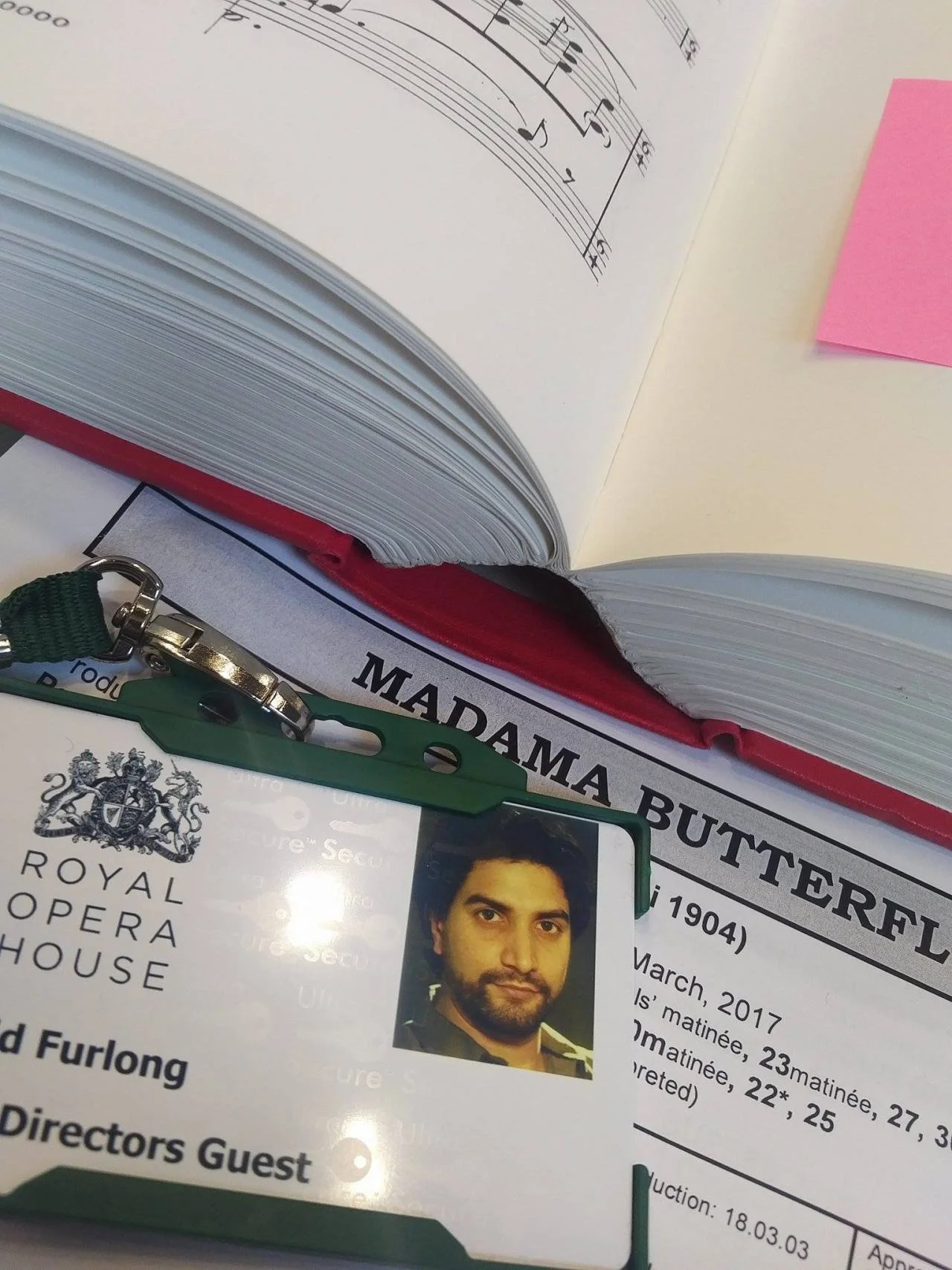
Apr 12, 2017HOW OPERA SHAPED ME AS A DIRECTOR TWICE IN TEN YEARS
In 2006, I was a young actor, two-years graduatefrom the National French Drama school of Chaillot. I landed in London to make it as an actor.
-
I got a dayjob as an usher at the Royal Opera House. I had good notions of acting direction, and admiration for some directors such as Robert Lepage’s highly hightened theatricality or Deborah Warner’s mega-contemporary takes on classics, but little did I know that sitting through a season of operas in the best house in the world would change my life forever. Just by watching, I learned from the most brilliant series of work I could ever see in the space of six months: Lepage precisely, David Mc Vicar, and most importantly Patrice Caurier and Moshe Leiser’s duo as directors. By simply watching and frenetically taking notes at the back of the auditorium, I was understanding what it means to have a proper vision of a stage, beyond the place of the performer, but through the lens of a bigger picture creator, a painter, a crowd-manager and almost a block-busteresque director. And I then knew I wanted to direct.
After deciding I couldn’t continue being at the front of houses, I left the Royal Opera House, having been taught an immense lesson. In June of that same year, I was putting on my first play as a director. It was a four-hander which contained what I felt was a very operatic way of creating images. To achieve this, I manically researched articles and interviews by each director whose work I’d encountered. Patrice Caurier and Moshe Leiser were the most articulate of all and their process fascinated me. One of their ideas became my motto, how an image can be anything as long as the audience can clearly see an obvious relation between what they see and the story being told through the direction. I applied these principles scrupulously at the scale of a studio theatre (Jermyn Street theatre to be precise) setting my play on a beach with a magical fridge standing like a symbolist cornucopia… And it worked ! The audience read the symbol, and I carried on directing !
My belief in the need for a vision and a strong concept was later confirmed in a Young Vic masterclass led by Daniel Kramer (now artistic director of the ENO) and I also probably overused it a little. But it certainly led to some foundation pieces that are still very representative of my identity as a director, like my first critical success, a version of Sartre’s The Flies with a live Rock-Band standing as the only physical and atmospherical set in order to create a visceral show. Music already played an important part in my work. In the decade that followed, I became a proper director. Through training, devising, experimenting, researching and developing my work, I got a little less focused on my ‘concept’ as an 'auteur’, and refined my craft along the way, re-placing the performer at the centre of my vision and my process. And by conciliating my background as an actor with this learning, my work finally reached a shape of its own and resulted last year in my production of 'Rock N Roll’ Moliere, The Doctor in Spite of Himself. This is the best accolade I got since coming to London. A dozen rave reviews and a nomination for an Off West End award as best director. But this welcomed recognition, at a time when I could have honestly given up, came not because I was seeing myself as a genius 'auteur’ but quite the opposite, it was because I accepted to be lost and to explore a crafty creative way, trusting my skills, rather than relying on formal overarching 'one-man vision’, it was about the work first. And this success is what gave me the courage to get back in touch with the Royal Opera House, ten years after.
In autumn 2016, I met with Amy Lane, staff director of the ROH. I told her my story, how important Opera was in my journey, and how I was drawn back to Opera as a sort of birthplace. Of course, I had done a little bit of Opera in the meantime by assisting at the Geneva Opera Studio, led by conductor Jean-Marie Curti, and I was already familiar with directing singers, musicians and some of the elements of this artform. I had also worked backstage in West-End shows so I knew the technicalities of big shows but I lacked the experience of working at such a scale and within such a place of excellence, which is what had inspired me in the first place. I was eager to learn how to manage such huge undertakings as Operas in one of the most important houses in the world. When I mentionned Patrice Caurier and Moshe Leiser among my most important inspirations, Amy smiled. A week later, I had one of the best surprises of my life: I would be guest director observer on Caurier and Leiser’s reprise of Madama Butterfly ! The very Opera that had triggered my whole journey ten years ago. Again, little did I know that these five weeks would change my life as a director for the second time.
In the building, the Opera company cohabits with the Ballet company and the Music department. In the Opera company solely, I’ve worked under the authority of the staff directors’ office who deals with everything related to directors from scheduling rehearsals to actually directing the shows on stage. This is done in cooperation with the Company’s office who manage the schedule of the singers, actors and all artists involved. They all also work in coordination the stage management, the costumes, and every department in the house. The first part of my bservership consisted of following Andrew Sinclair, the main assistant director in charge of putting the production of Madama Butterfly back on its feet, before the directors actually arrived. He was assisted by Hazel Gould, who would then remain the assistant director in charge when the production would later be on stage. I have to thank Hazel for accepting a permanent buzz of questions in her ear from me and allowing me to follow her and even her thoughts, like a shadow, most of the time. She shared so much and so openly with me. My first observations were very pragmatic ones, confirming things I already do in theatre. You need to understand your 'production profile’, break down the score in scenes or sections, prepare your knowledge of each scene, structure your work schedule, your calls for the cast, the rotas in the building and block or walk through the scenes with the singers/actors. These all seem like obvious directorial tasks but the scale of it is what makes the difference.
As a revival is supposed to be able to repeat as long as you want, there are hundreds of notes made on every staff’s score, from the assistant director’s to the stage manager’s, and as many layers of notes as there were revivals of the show. You have to make sense of it all and Andrew started his preparation 6 months ago to familiarize himself with the production. By watching different videos of the same show, making his own notes, crossing them with the ones from the previous directors. When I think of the fact that I was proud to just be able to follow the score on the first day of rehearsal, it seems ridiculous in comparison to Andrew who could give a precise musical figure on his first day too and the start of any sections in Italian…
In Madama Butterfly, there are 'only’ 5 principals, 1 gigantic automatic set, 3 acts and 'just’ one scene with 40 members of the chorus (that makes about 50 costumes and full make up to do before Act 1) ! But still, the production is considered 'light’…. Although when someone from the shoes department came down separately from the costumes’ team, I truly realised the scale of the work !
It’s impossible to comprehend the amount of work going on in the building until you’re a small part of it. If you decide to move a rehearsal on the main stage, chances are you’re impacting on four different departments and adding a night shift for the stage crews in charge of the wagons. 'The wagons ?’ I hear you ask. Yes, the whole backstage area is moveable on wagons which can accommodate as many sets as there are productions on stage during the same period, whether ballets or Operas. What makes me fitted for Opera I think, is my curiosity and obsession over Tetris, understanding how everything fits together, and taking notes all the time about the mecanism of things in order to understand this big machine.And of course, there is the soul of it all, the music. A huge and sacred part of the work and the main character of any performance performed at the Royal Opera House. Antonio Pappano, the musical director and main conductor of the House is simply a genius. When he walks into a rehearsal room, you can sense the atmosphere being uplifted with perfection. Atttached to Madama Butterfly is also Renato Balsadonna who was resident chorus master for ten years and makes his debut as a main conductor at the ROH. And in rehearsals, the pianist repetiteur, James, who plays Puccini like it’s a second nature. All their knowledge of music and of the nuances of Puccini appear every time they clarify a note to the singers. And everyone agrees that the particularity of the Royal Opera House is that Pappano is not only concerned by the music itself as a thing of beauty, but as a dramatic story-telling element. With Pappano, music is acting, and he knows his energy also conducts the intentions and the drama. For him, it’s about supporting the story being told. I’ve even heard him say to a singer 'don’t sing it beautifully, it’s already beautiful, that’s in the music and you have a beautiful voice so just play the situation’. Sometimes the music plays something that you don’t have to act and great conductors like Pappano or Balsadonna know it.
When you meet the whole orchestra, the level of expertise takes you to another dimension. Again, if these musicians are in the Royal Opera House symphonic orchestra, it’s because they are amongst the best musicians in the world. And the conductor acts also like a conductive piece, in the electrical sense: he transmits the energy of the production by talking them through the action, or just by telling them how beautifully Butterfly is acting at a certain moment. At a one point in an orchestra rehearsal, I heard Pappano starting to tell the orchestra what was happening in the show just as they were playing: 'She draws the knife and as she’s about to kill herself, the kid comes running in the room’. The music was lifted, every musician was playing along as he spoke to them. It was wonderful.
You can direct everything to the music: every emotional crescendos in acting, every moment of stillness where only the music should play, every dynamic set moves, each gesture or micro-movement, because each of these details tells a story. Moshe Leiser and Patrice Caurier are experts at doing this. They consider themselves 'Opera directors’ since they hardly ever touch another artform. They’ve directed all over the world. They are seen as incredible image-makers and have indeed created a vast iconography around their work. Though, they explained to me that these images are not the first choices they make, these visual concepts could be anything in their form. Their first choices are essential ones, about the depth of the story they want to tell.
For Madama Butterfly, they’ve chosen to direct it like the tragedy that it is, in the ancient noble sense, not just a simple love drama like it’s mostly done, but a deep universal, fatal, yet simple tale. And all the choices they made follow this major rule. First and most strinkingly, the vast empty zen space (designed by Christian Fenouillat) allows the characters to evolve at the scale of an antique amphi-theatre, and not in a picturesque little doll house with a garden like it’s mostly the case. In their production, everything is simple and pure in order to focus on the sense of the conversation happening between the characters. Here, they’re not creating pretty images of japanese landscapes, they are using huge symbolic painted backdrops to create a sensation of Japan rather than a detailed postcard. They also direct singers a lot like theatre actors. It’s about transcending the form of Opera by seeking the truth of the relationships between the characters, making them think about their internal motivations and believe what they say, not just sing it.
Moshe Leiser and Patrice Caurier are very precise in the way they direct both the higher stakes and the details of the dialogues. Sometimes in rehearsals, one can wonder why stop at every figure, when the singing is near perfection. And then, when you get to a stage and orchestra rehearsal, you see the bigger three-dimensionnal-200sqft picture they’ve created and you understand why they did it so carefully: At this stage, in the huge 2000 seater that is the Royal Opera House, every choice you made is multiplied by ten and if you made the wrong ones, they are going to blow up in your face once in the auditorium. Moshe spent hours on a very intense moment for the main character of Butterfly as he was not getting enough shattering emotion but 'just’ sadness, 'Sadness is easy, he said, but it’s cute, and I can just switch the tv off and forget about it. Here we want something excruciating, a shock for the audience’. Indeed, he was so right, if not directed properly in the rehearsal room, it can just be pathos in the main house and this is a usual risk when Puccini is badly produced. Because Puccini is such a master of story-telling, his scenes are very short and there is only essential dialogues. So you do have to 'place’ the stakes of the character at the exact level in order to reach the brilliance of the composer.
And thanks to the high stakes and to how the directors have delved into and the truthfulness of Puccini’s own perfection, Leiser and Caurier’s Butterfly production for the ROH is the most succesful revival done regularly over the last fifteen years. It’s also thanks to what Andrew Sinclair, the resident director, calls 'their magic’. I remember when I first saw the production ten years ago, I was struck by how they created simple but also heart-wrenching moments, by just bringing to an image one single element that can tear your heart out: the bonze coming from the horizon, the backdrop of stars at the end of Act one, the shadow of Pinkerton’s wife in act three, or finally the simplicity of the last image, that I won’t spoil here, which is extraordinarily tragic ! All these moments seem simple but they are highly thought through, connected to the contemporary world, and therefore, to a contemporary audience. Leiser directs with very immediate references: the character of Pinkerton is compared to Trump during the 2017 rehearsals (he probably referred to Bush twelve years ago). In any case, by giving a very concrete and detailed existence, both in the acting-direction and the images created, their visions are striking and their work appear seemless. This is the magic of Posh and Mosh…
The reviews proved it several times already over the years but this 2017 revival was particularly acclaimed thanks to the impressive cast led by Ermonela Jaho as Butterfly, Marcelo Puentes as Pinkerton, Scott Hendricks as Sharpless, Elisabeth DeShong as Suzuki, and Carlo Bosi as Goro. Watching them has taught me so much about singers. First, they are also without a doubt the best in the world, they’re incredibly strong and powerful and they are perfect for their parts. Casting at the ROH is known worldly for being of a very high standard. So you, as a director, need to be on top of your game as well.
Just like they know their score well in advance, you need to know your production from every angle. You need to be able to know everybody’s trajectory on the stage, every subtext you want them to carry. You need to give a sense of perspective on each character and know the meaning of everything for everyone in a scene. This means being able to respond to an internal motivation question as well as to the purpose of a character or his action at a certain moment of the show. You can’t just answer with your intuition, you have to justify each demand with your knowledge of stagecraft, and rely on the music to support your choices. You also have to bear in mind the unimaginable physical demands of singing 'full voice’ to the biggest houses in the world and the technicalities of singing like simply taking their cues from the conductor. All of this should enter into the mix of your directing. One of the only difficulties for a director in Opera might be that singers often sing the same part in different productions and that they have a version of their part slightly embedded in their body. Your job then is to fulfil the vision of the director, to guide them as much as possible through what they should do on stage, guide what they should feel in relation to their partners and to the music. It’s easier said than done, but it’s still as easy task to find answers to any questions because every measure, every note, every gesture tells a story. You’ll always find an answer to keep the 'spirit’ of the production by searching through the notes made on a one of your team’s score…whether the note you’ll find is from 2005 or yesterday is another story !
The cast of this revival of Madama Butterfly were one of the best and fun teams I’ve ever had the chance to work with. And Marcelo and I bonded over the fact that ten years ago, he too was a young waiter just opposite the ROH and was yearning to come back her one day. The parallel was touching.
During this past decade, I’ve learnt to structure my work, to frame my intuition as an artist, and to articulate my practice, all with small teams of people, running my own company. What I learnt by working at the Royal Opera House in just five weeks is:
First, that I was right to find my own structure, which is comforting because it’s not easy becoming pragmatic about the art, without guidance. I can now do this.
Secondly, there are many aspects in which my journey and my intuition as an experienced practitionner have proven to be very useful. In particular, my theatre background was very in keeping with the director’s demands of the singers.
Most importantly, I’ve learned that these good intuitions and this 'talent’ partly, matter only for the public, for the end-result, but are really not enough. If you’re working in such a worldy renowned place, you’re probably talented but no-one really cares about it amongst your colleagues. What matters here is your structure, how you can collaborate, your intelligence in dealing with all the talents that are contributing to your work as a director. And there are so many minds working with you. Antonio Pappano says that working on Opera is a great mix of intelligence and intuition.
Talking to the Maestro in the Cafeteria once, I said I felt very lucky to have been given the opportunity to properly start my journey in Opera at the ROH, almost too lucky because since then, everyone I meet has been telling me that Covent Garden is one of the best structured houses in the world and that I will never find such quality in every aspect anywhere else. Pappano smiled and said nothing. That smile was the simplest way to say it all. Him and people like Renato, Moshe or Andrew are rare models for me. They don’t seek egotistic genius recognition, they actually took the ego completely out of it. You have to, because when you deal with as many people as they do, not only are you in charge, but you’re also under constant scrutiny over every decision you make and it demands a masterful professional gravitas.
That’s what I did not expect to find in Opera. The meaning somehow of everything I was already striving for in my work as artistic director of my own company. In particular, I found an answer to a question I’m often asked: Why do you want to work at such scale ? Why don’t you do a solo ? Why don’t you put on lighter shows, star in it and get produced, you’re talented, you could do well? Why don’t you do things for yourself? And one day, in a Sitzprobe (orchestra and singers’ rehearsal), as a lot of the other departments came down, all the music team, the directors, a dozen students from the royal academy of music, six internationally renowned singers, and Antonio Pappano conducting with the most beautiful grace and softness Act 3 of Madama Butterfly. The music was of course beautiful but at one point, not a hugely emotional point though, I was looking at all these talents, all these human brains working together at creating beauty. There were about a hundred people in the room. And I was so taken by it, that I started crying very softly in front of a scene I’d already seen rehearsed a dozen times before. And I knew that it was not only because Puccini was terribly good, but also because I had my answer to the questions. Why don’t I go solo? Because I don’t care. I care about the collectiveness, about a group of human beings working together at creating wonders. That’s all I’m passionate about, that’s what holds my shows together, that’s what I teach my drama students and that’s why my company is called Exchange Theatre. This is no intuition anymore, it’s a statement for my practice. That’s why the ROH changed my life for a second time.

Feb 23, 2017Change the conversation
Today at the Young Vic, a session about The German Theatre Aesthetic was held to an assembly of directors and designers. It was about hearing about Johanna Meyer’s practice, a young German
-
set designer who is currently working with Johannes Schütz, the designer for Joe Hill Gibbins current production of Midsummer Night’s Dream. Johanna’s talk was very enlightening and all about collaborating with the director but being empowered and very free as a designer, and exchanging, talking about things… a lot.
Some questions were heard about how somehow here in the Uk, the designer is in general considered as a technician to materialize the director’s ideas and how Johanna’s background and training seemed very different and rich, maybe richer, and very informative anyway.
Then, one question came up about how German Theatre is the trend and how we’re fed by Ostermeier’s work at the moment or by Ivo Van Hove and by European theatre in a broader spectrum, and how is this good for Uk Theatre ? And how Joe Hill Gibbins or Sean Holmes are very keen on German Aesthetic and are in owe of ‘these things’ (I quote) until Johanna was litterally asked why she was a good import.
The point of the question being about why can’t British theatre not just inform itself by its own culture…
I think many would agree that the answer is very obvious and I won’t go on talking about cultural exchanges and being influenced by others (David Lan does it better than me) but what is important I think is that this question offered a very accountable view on creative exchanges, as if everything has to be transactionnal. As the person who asked it agreed himself, this way of putting it in our capitalist society can be touchy.Now, in all fairness, maybe the formulation was just bad and I don’t think it was so ill-intended as it sounds - though it did sound awful - and I talked to him afterwards, he said he didn’t mean it like this. He did mean that ‘structurally’ Johanna is an ‘import’.
But if we continue using this ‘structure’ of thinking amongst artists, if we question someone like an ‘import’, and not like a collaborator, we are prolonging the arguments of Brexit, Trump, closure, rejections… in which people are merchandise.
We have to change the conversation, we have to talk empathically, like Johanna did through the whole talk, about sharing ideas between beings.
And I think that’s what people like Joe Hill Gibbins, Simon Stone and many more are doing actually: changing the conversation. I’ve had the chance to be a small part of Joe’s devising team on the Changeling in 2011 and I can tell you he’s very British, despite being very influenced by foreign practice. What’s rich is the encounter of his identity with his influences. Same goes for me. I’m very French, and very Mauritian and very influenced by ten years developing in British theatre, or Street performances or screen acting or… well whatever… I’m no merchandise. Joe Hills Gibbins or katie Mitchell aren’t merchandise when they work abroad. And the sum of all this doesn’t alter any of my roots. And people like us don’t alter any other indigenous culture.
For me it goes without saying that this is what our work is about: creating conversations between who we are and who the others are !
Though, maybe it deserves to be said in current times in order no to adopt a vocabulary that shapes a conversation of division.

Aug 2016OUTSIDE OF ENGLISH THEATRE, DO WE KNOW
OUR ROOTS, OUR CLASSICS, OUR ORIGINS?
This is a D&D Report from DEVOTED AND DISGRUNTLED: SHALL WE CREATE A EUROPEAN UNION OF ARTISTS?
-
Here’s what led to my question:
Ten years ago, I created Exchange Theatre in order to translate major French plays in English. Major as in really really big. The sort of plays that tour nationally every year in a different production, or whose authors are internationally in general knowledge. Victor Hugo for example, or 20th century symbolist Paul Claudel… the French TS Eliot… You know ? No, you probably don’t. And if you’d know of him, you’d probably never seen anything produced in the Uk. I know because I’m the only director to have done one of his plays in the Uk. And it was the founder show of my company ten years ago. Claudel is huge across the channel. Unknown here. This is just an example from my experience, which led to my question above.The conversation started with people asking me to explain where I was coming from. I told how I started my company. I was a young actor working on the London Fringe, doing Shakespeare, new writings pieces, and whenever I talked about French theatre to my fellow colleagues there was either a big blank in conversations, or a total misconception of what it is. Seen as terribly classical, Moliere was reduced as period farces, excluding all his depth, and confused with Commedia Dell'Arte… ! Although, Italians were not better known: Pirandello, Dario Fo, even Goldoni are just as obscure as Spanish golden Age of Comedia and I only encountered puzzled faces when mentionning Calderon.
I had trained in France and I had learned not only about Shakespeare but also Marlowe, Wordsworth, Kipling, Dahl, Pasolini, Goethe… I thought there was something terribly missing there. So, because I couldn’t right the wrongs for the whole of Europe and because I trained in France and was the most knowledgeable for it, I set up my company in order to take a niche of bringing French theatre to the Uk and do it justice. Since then, we’ve translated for the first time plays by Feydeau, Sartre and Claudel among the most famous ones, over ten years. Little did I know when I started that there would be so much to do, so much space in the niche.
In the cultural world in the Uk, there is no real figure or calculation of the place of foreign works, although according to the translator Kevin Halliwell, (the only one who translated the National Swedish treasure -playwright Lars Noren- into English) only 3% of work comes from an international background. Which will explain that you’ve never heard of Lars Noren. By comparison, France has 40% and Lars Noren is performed at the National theatre.
So this is how I came up with this provocation, a decade later: In the Uk, outside of English theatre, do we know our foreign foundations too ? The conversation started by this clear statement by an English practitionner: Outside of the performing arts, we certainly don’t because you don’t need to. His explanation is that the educative cursus specialises very rapidly, very young and then, becomes very narrow in University. Even within the performing arts or the cultured world, we tend to lose track of these classic foreign works.
Many in the panel will say that it didn’t use to be this way. And it’s true that when meeting scholars or practitioners older than 45, they do have a real tangible knowledge of Theatrical heritage from outside the Uk. In the 30’s and 40’s apparently, there was a lot more interest to foreign arts in general.
Nowadays the literary, cultured intelligentsia has a certain knowledge but it’s not in the culture in the Uk to share this knowledge to the general public. There is very little room in the medias to disseminate foundations of other cultures or when there is, the researchers, the speakers are invited not to talk about what they want but to talk about what the broadcaster wants, which is mainly suited to the audience. And the audience wants to be told about themselves and what they know much more than foreign narratives.
It appears that directors, dramaturgs are more likely to be more knowledgeable on these questions because they have generally a university background and are led to do research outwards. But for the actors now, actor training is very limited to acting, not to the history of theatre, even less towards foreign history of theatre.
Part of the problem resides in the language. In a world that speaks English universally, there is no need for people to learn other languages, so with no efforts being put in the learning of languages, it’s a whole opening to the rest of the world that gets shut. The general movement in Cultural Exchanges is to go outside and bring back material not to let elements from outside come in and be integrated. This is a recurrent pattern in regards to very many themes, due to certain insularity of Britain and the system of its education too.
When it comes to translating here’s an anecdote about when I was working on my translation of Xavier Durringer’s Bal Trap. I approached Mark Ravenhill because he was credited as the translator of a previous Durringer’splay, and I wanted to know if he would do it again, when he answered “I don’t speak French”. I was confused as his translation had been performed at the Royal Court. Then he explained: his job was to rewrite a litteral translation.
Even Christopher Campbell, literary manager of the National theatre admitted recently at a symposium on French theatre (held at the French Institute) that playwrights are so important in the Uk that their credit as a translator is crucial to the commercial success of a show. It’s a great way of having David Harrower’s version of a Strindberg play or Tony Kushner’s new translation of Brecht. However good those productions and playwrights are, they are not Strindberg or Brecht, they have a style so the plays are not real translations. They are adaptations, and they make the plays more British. But an adaptation of a play takes it away from the original and this is the current model. Are we stuck here ?
Someome goes even further and asks how to go beyond Europe, how to get to know non-western classics like Syrian classics for example.
In a way, theatre has responded to the issue, ACE responds, NT and NTScotland and Wales have responded by nurturing even more their local cultures and languages.
And even by going inwards, theatre is not more successful in general so if theatres have problems reaching out, how can they produce works that comes from outside too?
Theatre is reputedly expensive and inaccessible despite all the attempts at making it more easy to access and cheaper. Actually the cheaper and easier it got to see foreign theatre, the less curious people have been.
Mark Ravenhill is actually here today and arrives to join the debate at this precise moment. For him it’s about Education. How education can embrace multiple identities and how the world has changed.
The conversation leads to the fact that Theatre does not go as much in schools anymore apart from TIEs to learn languages or address social issues, but those are not purely cultural endeavours. In schools in general, the teaching has ‘gone bad’: we don’t teach other people’s history, we don’t build critical thinking. And there lies a political will to create good citizens, not good critical citizens.
Part of this political agenda is also in the system itself: Education is expensive and not empowering for people from under-privileged backgrounds and minorities. A mostly white British population has access to good schools and their interest are towards their own culture. It’s also echoed in the treatment of equalities in the Uk. Gender and Racial equality are schemed throughout the arts and everyone agrees in those principles. There is no obvious racists in the arts, but we work in a system which functions in a divisive, racist way: since school, the chances of working in theatre are very reduced for less privileged children.
Theatre and teaching therefore reflect a post-colonial structure. Obviously the debate has significantly broadened from the original question but ties in to the following development: If the system is by default a white British elite, who tell a white British narrative, it’s already very hard to imagine it producing a good Asian or Black narrative. And if it’s hard to imagine the system promoting its own existing diversity, how can we imagine that it would produce entirely foreign works.
Although, this is what’s important here: it ought to do so. Because any bridges built to go beyond our borders is crucial at the moment. After Brexit, with the rise of extremists on all sides, despite all ethnicities, what’s important is to create bridges of new stimuli, address the idea of a globalising theatre too. David Lan, artistic director of the Young Vic talks about the importance of being able “to be influenced by others”, speaking about international theatre. Even for BAME artists, the importance for them to reach out to their own poets, their own roots and indigenous litteratures and extremely important to elevate the fight for diversity and not summarize it to a race equality question.
The talk ends on a positive note. There are a lot of organizations already going in this direction. Esmee Fairbairn foundations funds a lot of outwards work. The Arts Council just opened an international practice department and the consensus seems to be opening up. There is also some networks like IETM, or The Fence, which are already ten years older and are pan-European structures probably most likely to partner with such endeavours.
Interestingly, when finished, we talked a bit more about the thirties… before the war when people all across Europe were starting to understand the need for Inter-cultural dialogue and then this horrible world war happened and we started from scratch again, and here we are now starting to get it again… when at the same time, the shadows of more world conflicts is looming…