
A House Bath and Madame’s Late Mother by Georges Feydeau
Two classics of French comedy based on the simplest misunderstanding
“Exchange Theatre has done a service making those plays available in English.” Reviewsgate
Rosemary Branch / Tabard / Brockley Jack
A House Bath directed by Gael Colin
Madame’s Late Mother directed by Samuel Miller
The first translations in thirty years

David Furlong as Lucien, Fanny Dulin as Yvonne and Andrew Dowbiggin as The Butler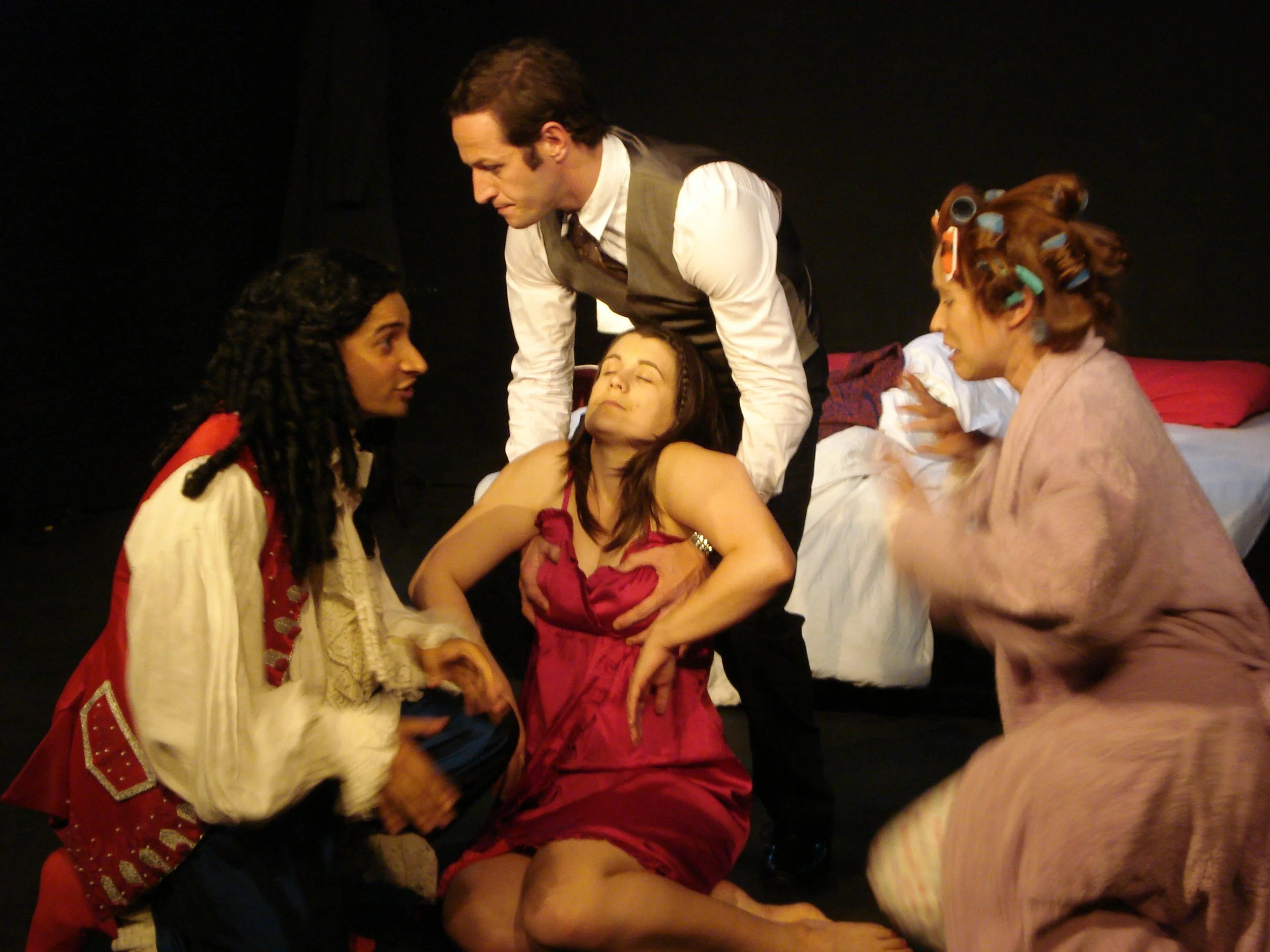
A House Bath, British Premiere
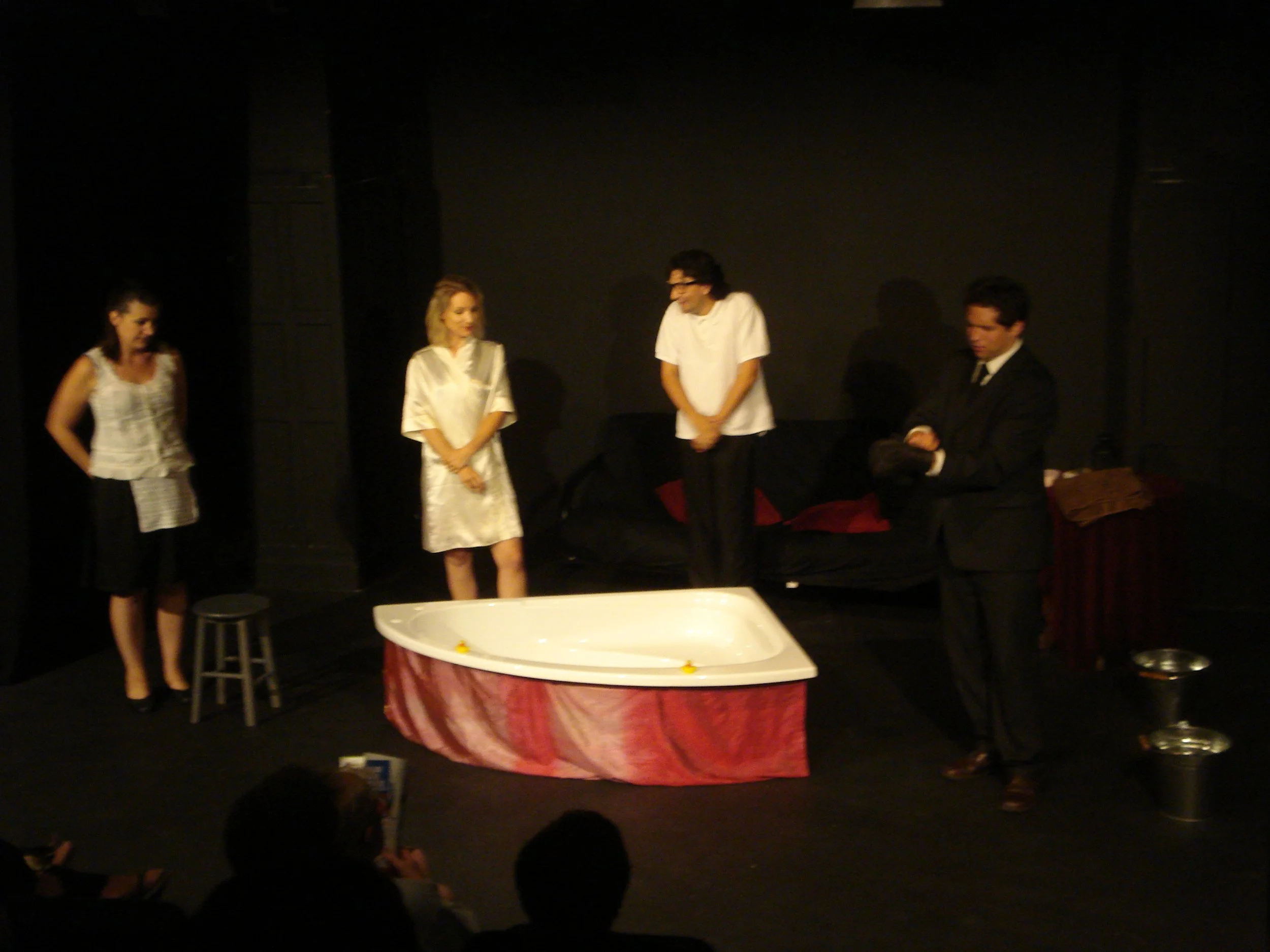
At night, Madame wants to have a bath, being prepared with much attention by the maid. When Madame changes her mind, the maid decides she might have one, when suddenly Monsieur comes back…
Madame’s Late Mother, British Premiere
At 4 O’clock in the morning, a row: she wants to sleep, he comes back from a party. Suddenly the doorbell rings…
Georges Feydeau
The Genius of French comedy brought back to the London stage. Georges Feydeau is an illegitimate son of Napoléon III. Very young, he neglected school to make theatre. Inspired by Maxim’s Cancan, la belle époque, he wrote some vaudeville masterpieces mocking the bourgeoisie such as A Flea in Her Ear and Sauce for the Goose. Feydeau made France laugh through his vaudevillian farces, and, in the process, dominated the genre. Some have seen in Feydeau a precursor of Dadaism, surrealism, and the absurd.
“Beneath the frenetically joyous surface is a vision of the world in explosion,” Feydeau said.
About
The performances offer somewhat of an existentialist view of an absurd universe where men and women confront a hostile world in which the innocent suffer with no hope of comic resolution. Feydeau’s work had an undercurrent of pessimism, with many of the characters bringing suffering upon themselves by their affectation, over-ambition, and romantic and idealistic notions. While Feydeau’s basic premise may be founded in reality, the characters and plot are quickly pushed into the realm of the irrational. He was not an experimenter or an innovator, but an exploiter of the farcical possibilities inherent in the dramatic conventions that he adopted.
His characters are ordinary people who are aggressive and, at times, cruel. While his plays are known for their nonsense, fantasy, and bedroom farce, they are also known for their sense of madness and their geometric precision. Lurking beneath the surface is insanity, and a vision of a conflicted world.
Creative Team
Translated by David Furlong and Fanny Dulin
With Niall Costigan, Andrew Dowbiggin, Fanny Dulin, David Furlong, Anna Ruben, and Emma West