The Doctor in Spite of Himself by Molière
A contemporary take on one of the rarest Molière farces about his own creative journey
Lycée Francais CDG / Drayton Arms / Exchange Theatre
Directed by David Furlong
David Furlong OFFIE nominated for BEST DIRECTOR
“High voltage energy and clever direction, The Doctor entertains thoroughly.” UK Theatre Net
★★★★ Londontheatre 1
★★★★ MiddlePeg Review
★★★★ Everything Theatre
“Rock and roll Molière, … excellent performances by the cast, and masterful comedic style. … Exchange Theatre’s version of Molière is clever, very funny and well adapted for contemporary audiences.” ★★★★ The Upcoming
“The company’s talent and vision is highly commendable and deserving of larger production values; their commitment to bringing audiences high quality French theatre in intimate venues makes them one to watch.” The Play’s the Thing UK
Molière Meets breaking bad
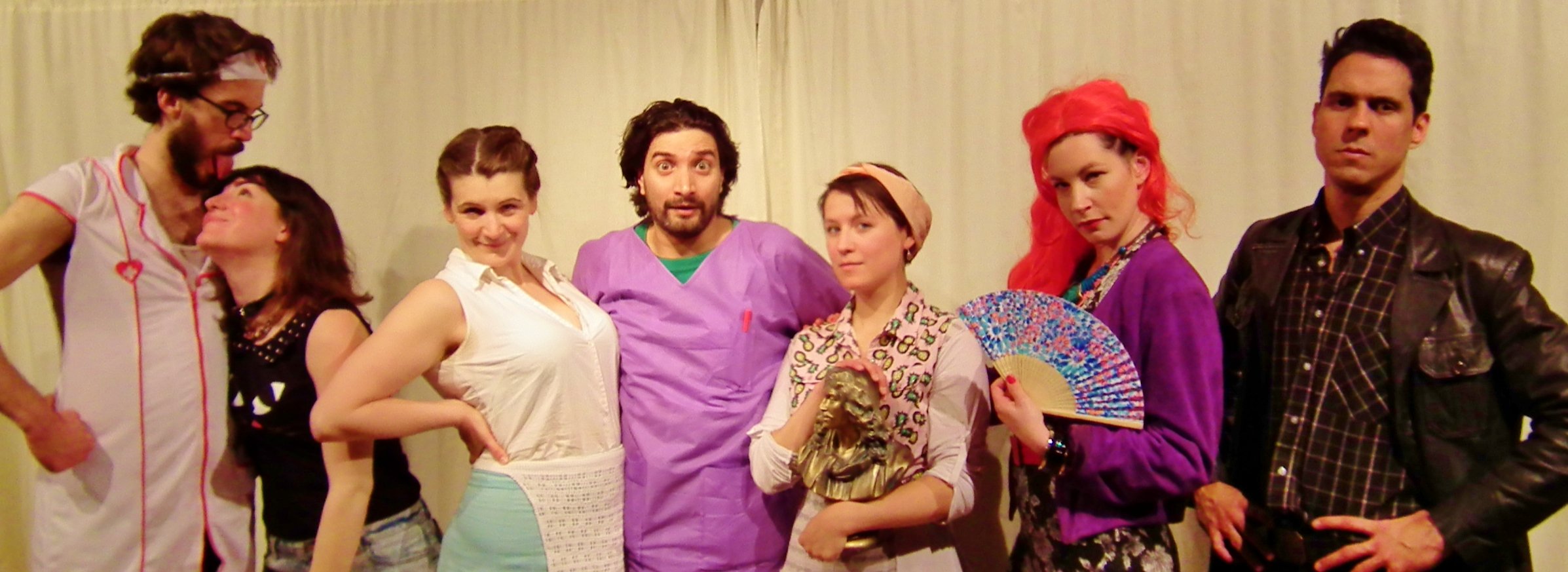
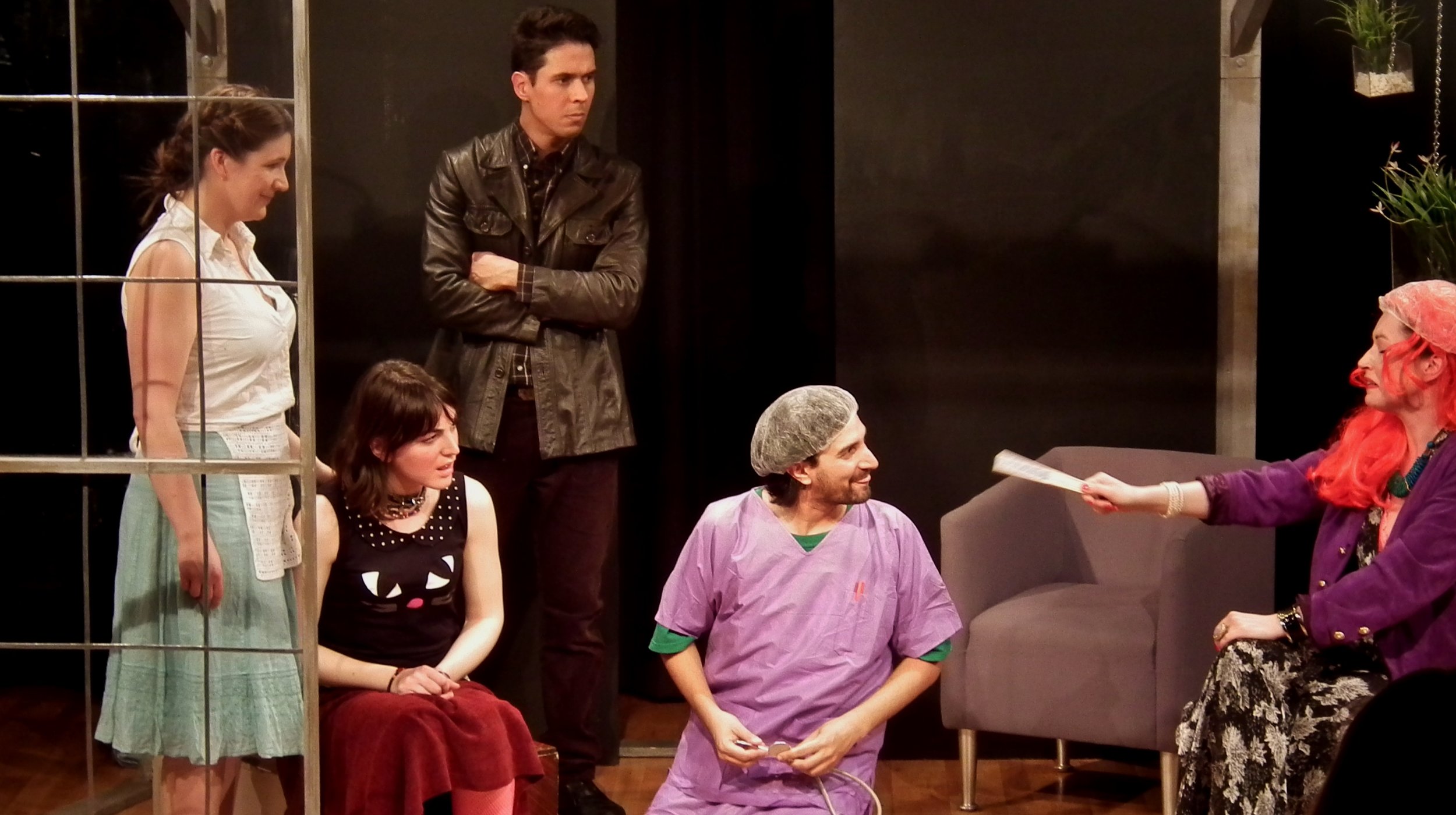
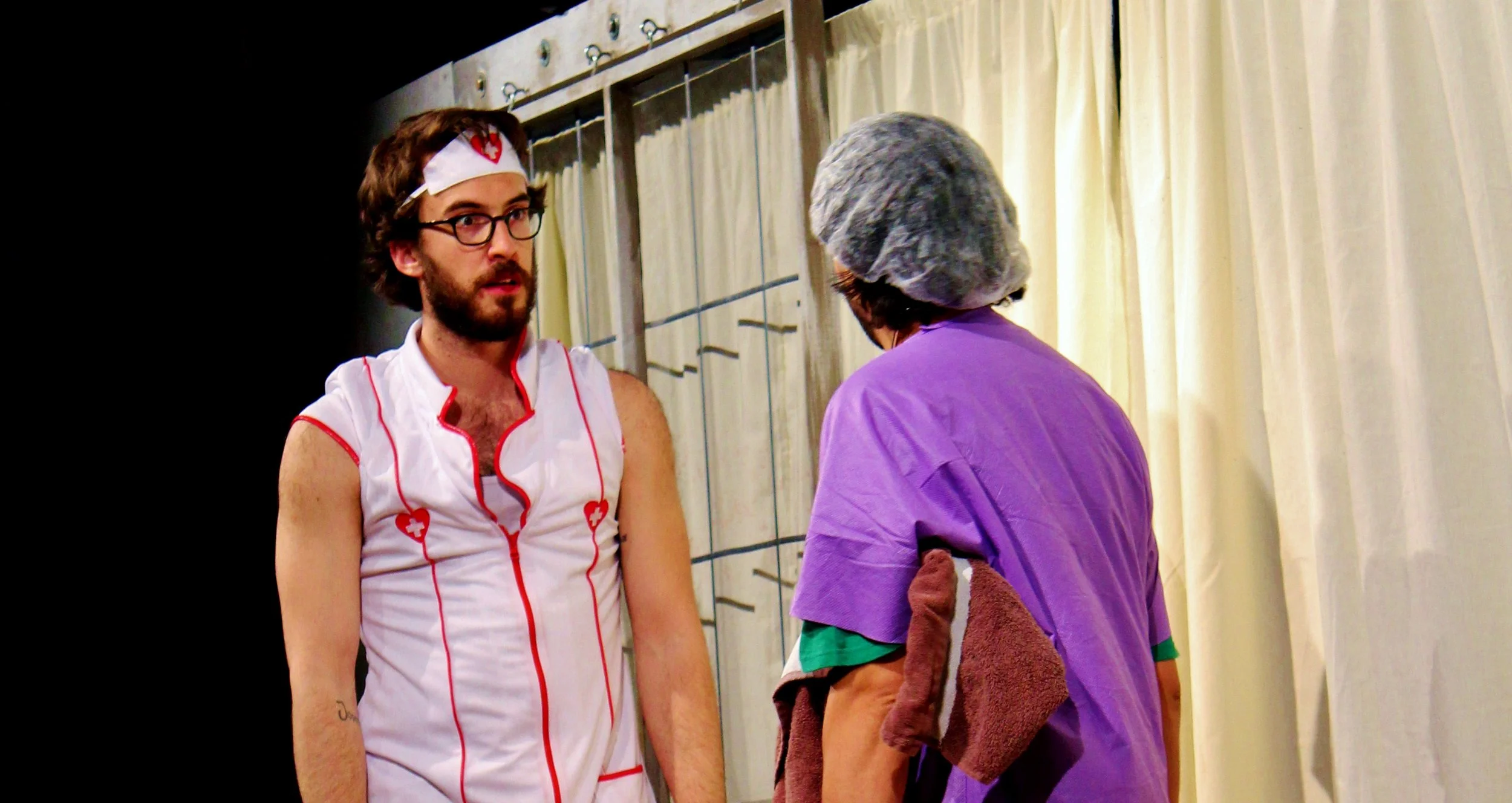
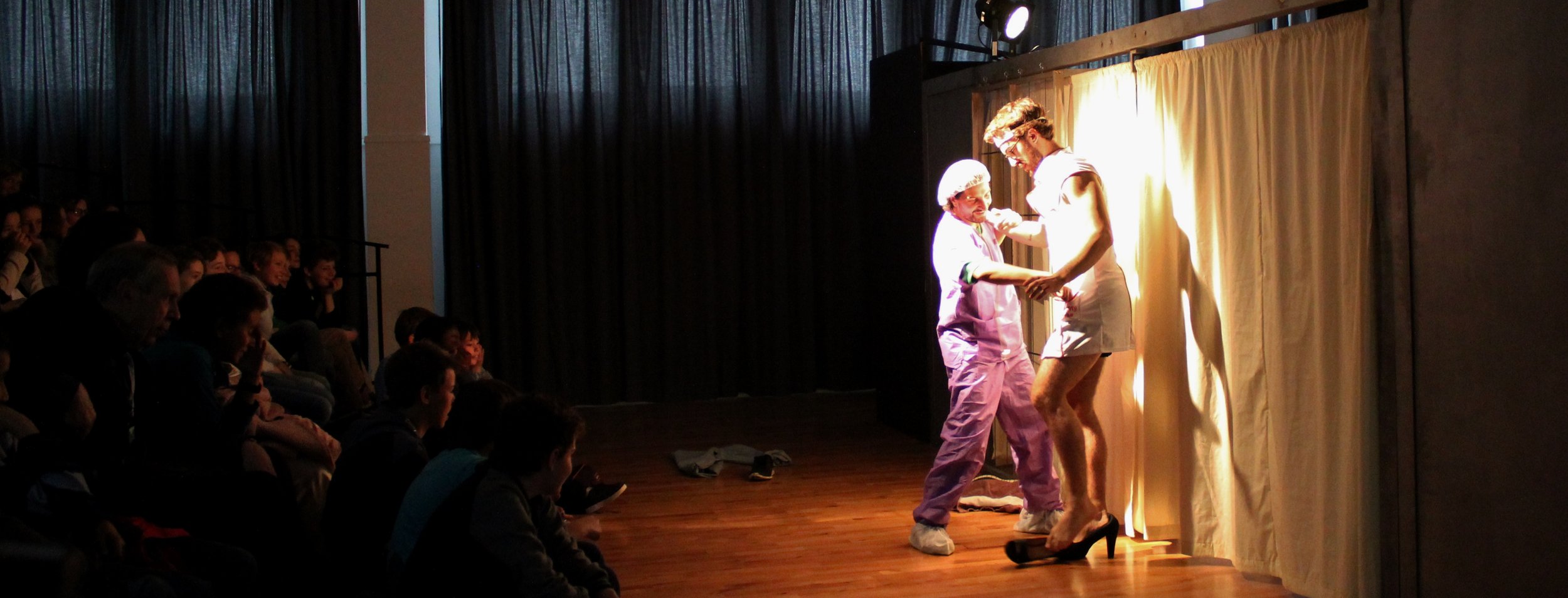
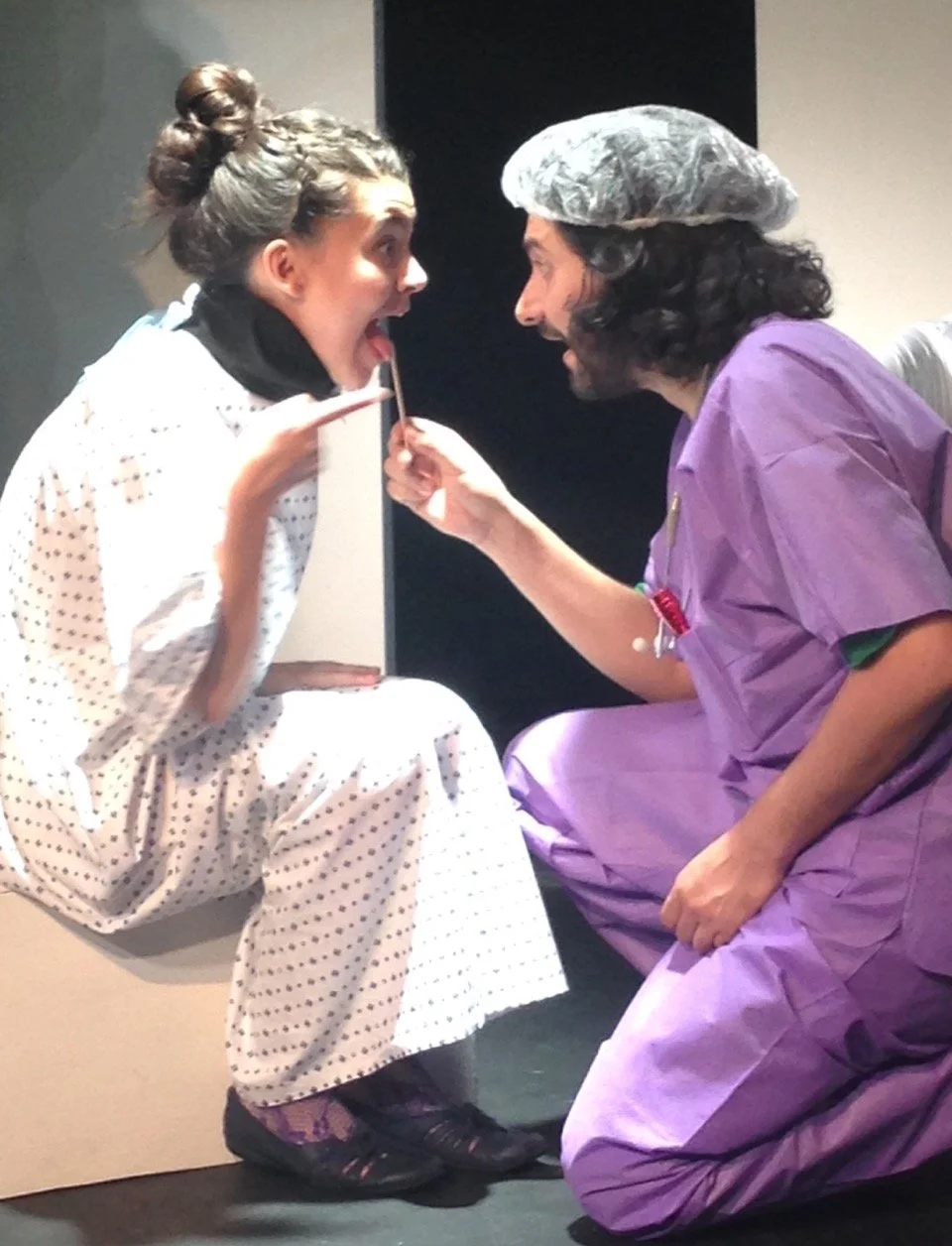
The Doctor in Spite of Himself is here in the UK, one of the least produced of Molière’s plays when compared to The Misanthrope, Tartuffe, or The Hypochondriac. Sganarelle, a woodcutter, a drunk and a brute, beats his wife, Martine. To avenge herself, she makes believe that her husband is a doctor but who would only work after being beaten up. Lucinde, Géronte’s daughter, in love with Léandre, doesn’t agree to her mother’s arranged marriage to Horace. She pretends to be mute as a way to protest. Géronte appoints Sganarelle to treat her daughter. After being beaten up by the servants, he starts taking his new position seriously. Against all odds, this doctor, in spite of himself, performs miracles. Lucinde’s voice comes back to stand up for her marriage to Léandre. Géronte accepts him as her son-in-law when he inherits a little fortune. Sganarelle forgives his wife and lives on to be a doctor.
Molière
Le Medecin Malgré Lui was Molière’s return to farces and one of his most successful plays. Prior to this, Molière, the leader of a travelling company that he took on the roads for ten years, saw himself as a popular entertainer and a village buffoon. Back in Paris, crowned by a national popularity, he was welcomed beside the King’s brother at court and triumphed again with his trestles comedies. Transported by such a success, he started thinking of himself as a proper playwright and dared tackle some more mature and critical comedies with more dense reflexions. He was then submitted to a very harsh criticism and censorship from false critics and false devouts, all the pretenders he hated so much.
Actor, director, and satirist at the top of his art, he wrote, in spite of himself, The Doctor in order to regain success. He projected in the main character of Sganarelle, who is forced to lie to the world in order to regain credit, his own deception of not being able to be taken seriously by his more accomplished works. When his previous plays, almost philosophical, dealt with existentialist matters, Molière did not hesitate to fall back into a great triviality. The play was an absolute triumph. Molière added a marvellous derisive take to the heritage of Italian Commedia Dell’Arte and defined French farces.
Director’s note
Misunderstandings, comedy, wits, prank, mockery. The play’s success goes beyond any other and offers Molière an opportunity to even mock his own audience whilst reflecting on his own creation. Unknowingly, he also defines the heritage of French comedies that would follow and will be studied for centuries in French classrooms, where mostly all the parts about scatology and sex will be kept silent…
Molière said, “Comedies are only made to be performed”. Our production of The Doctor In Spite of Himself not only offers a British audience the chance to see this rare classic comedy but also the opportunity to have a very contemporary and slightly chaotic look at the ‘upstarts’ and into the mind of a genius in a very true but contemporary version.
As part of the rehearsal, our research and development work on a Molière produced in Shakespeare’s land suddenly took us on some path we did not imagine. Just as if The Bard and his supernatural elements (as in The Tempest or Midsummer Night’s Dream) would logically have to appear and tease and poke at our classics. As a result, this production is the fruit of many months of work with the laughing energy from Molière associated with the magic of Shakespeare. What a great exchange.
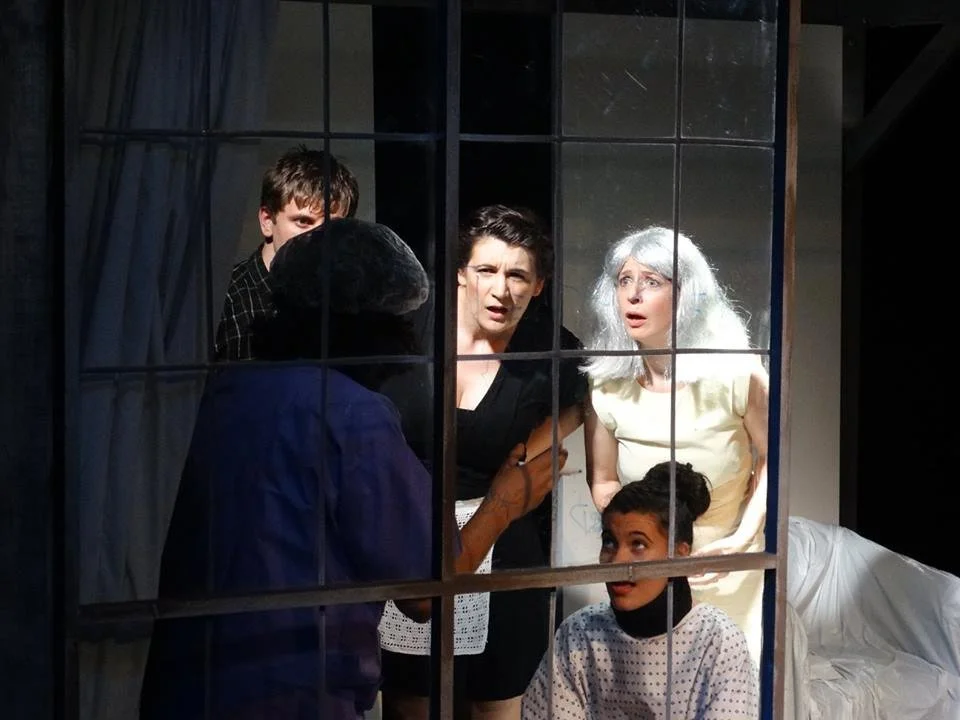
Creative Team
Directed by David Furlong
Translated by David Furlong
Set Design by Annick Bosson
Lighting Design by Camille Bortz
With Anita Adam Gabay, Caroline Roussel, Jacqueline Berces, Rachel Gemaehling. Fanny Dulin, Leo Elso, Victor Klein, David Furlong, Matt Mella, Lula Suassuna, Alexandra Bergeron and Yanouchka Wenger Sabbatini
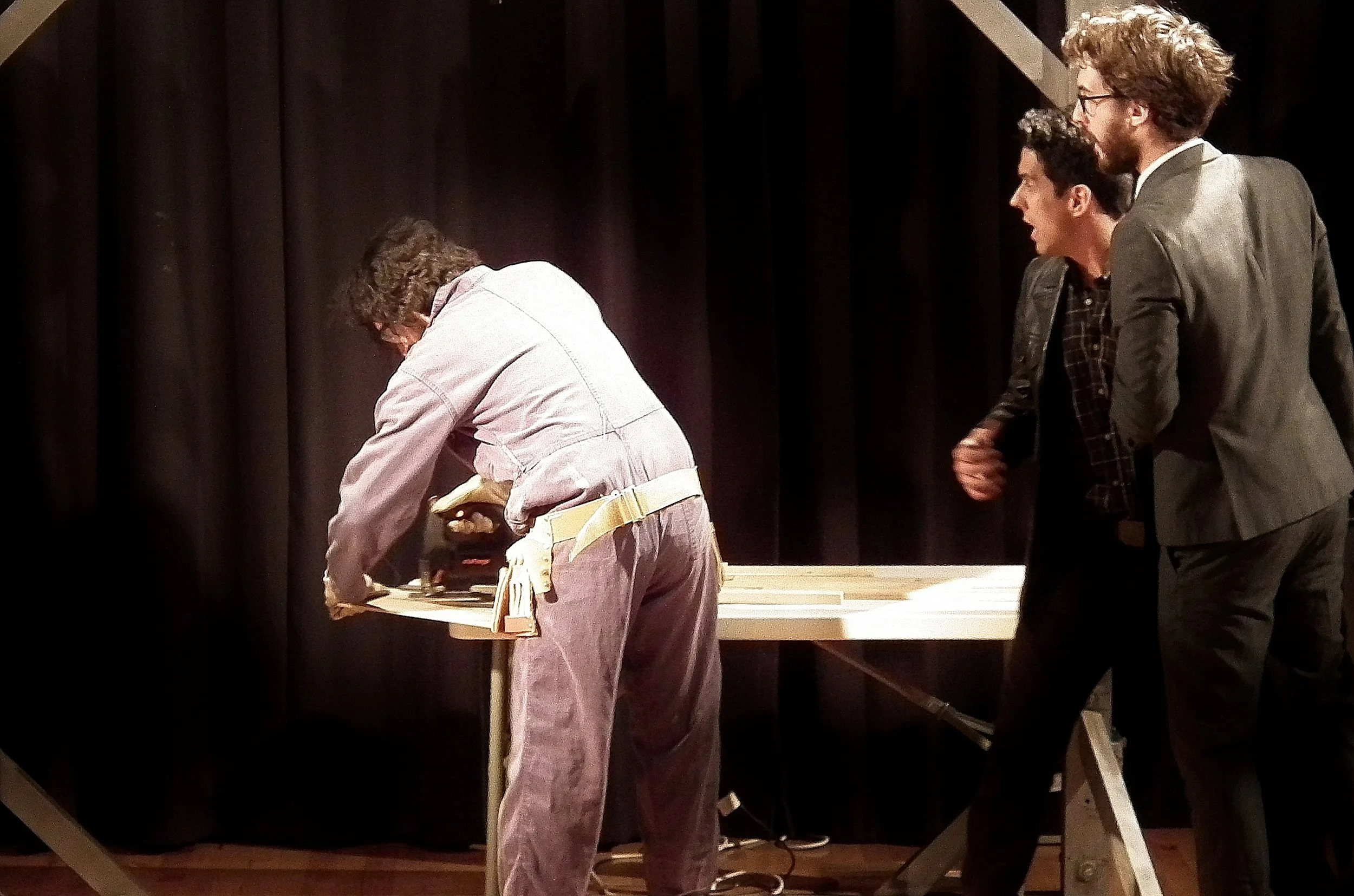
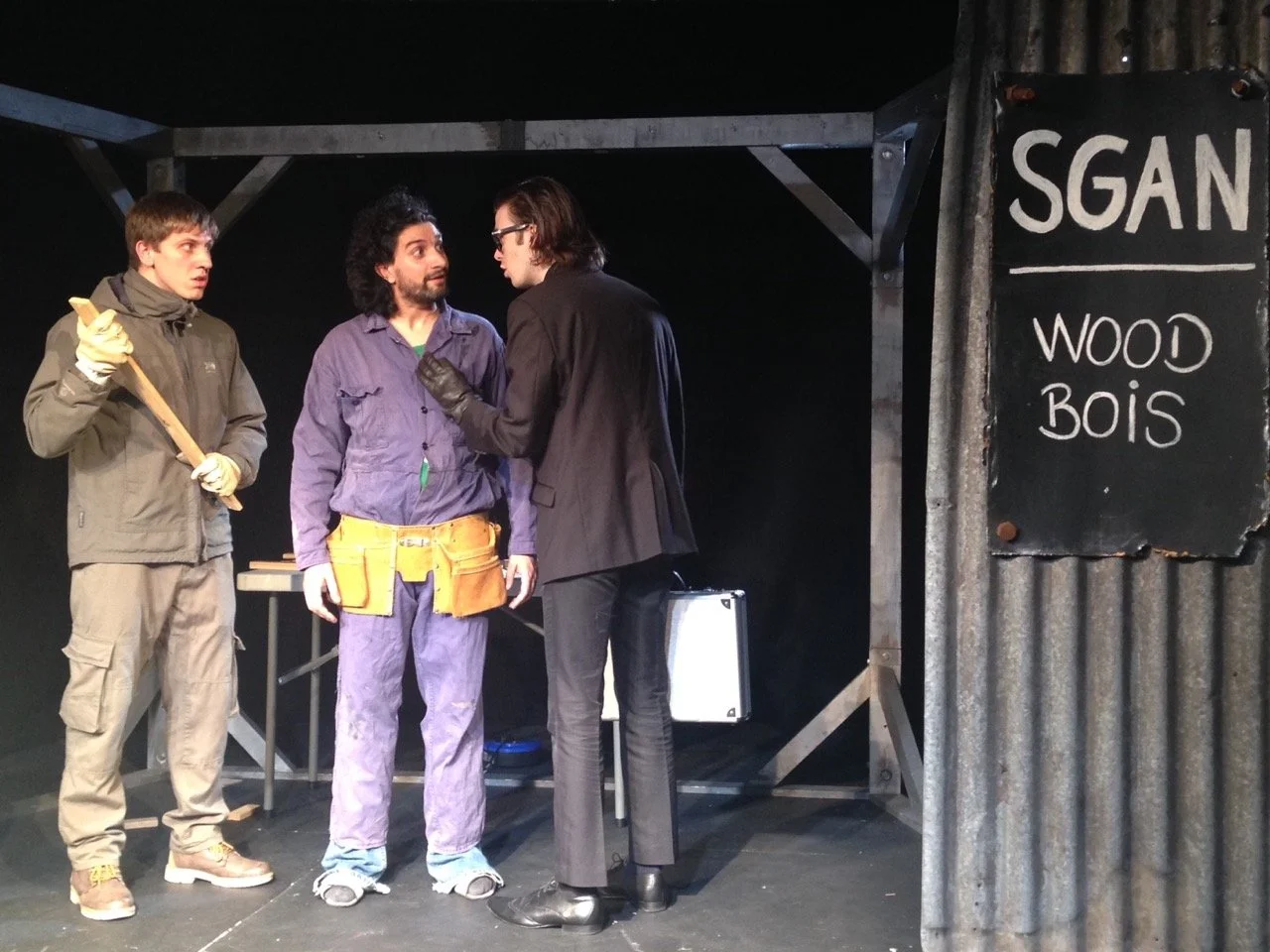
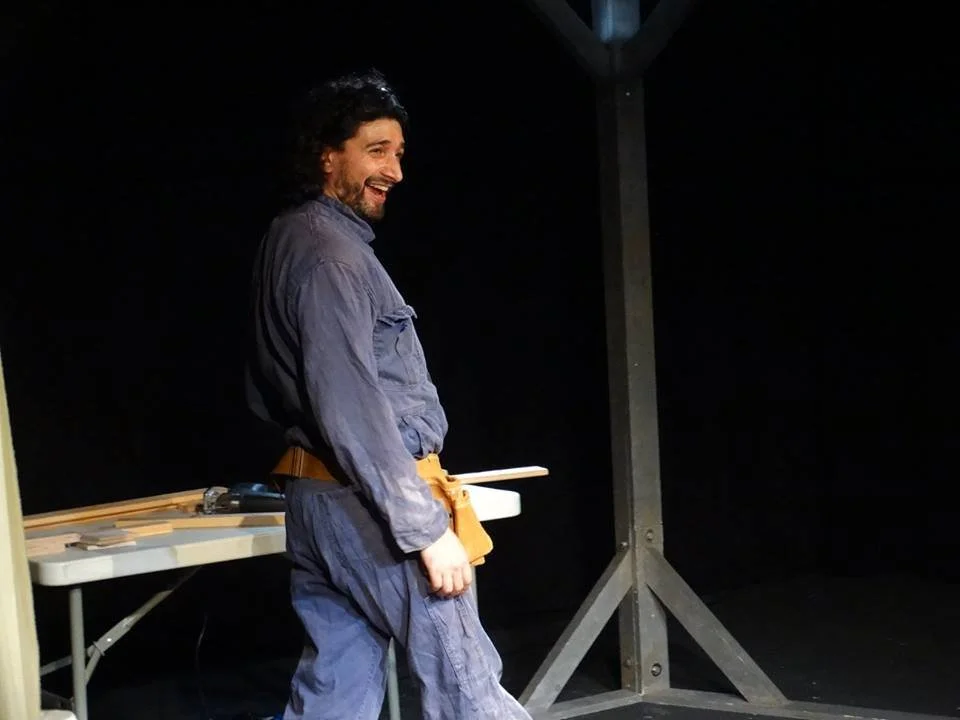
Sganarelle's wood workshop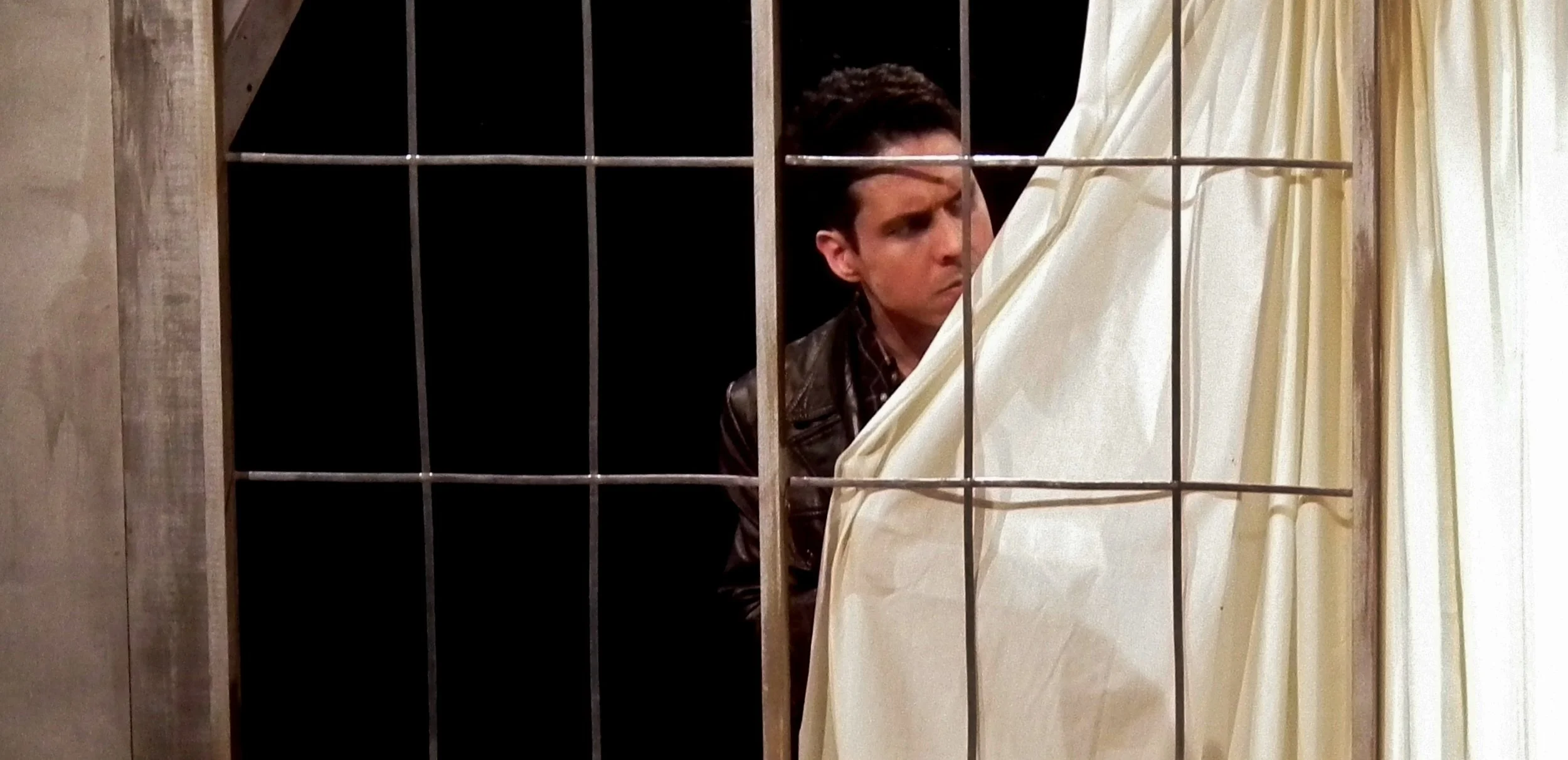
Lula Suassunna as Lucas
Rachel Gemaehling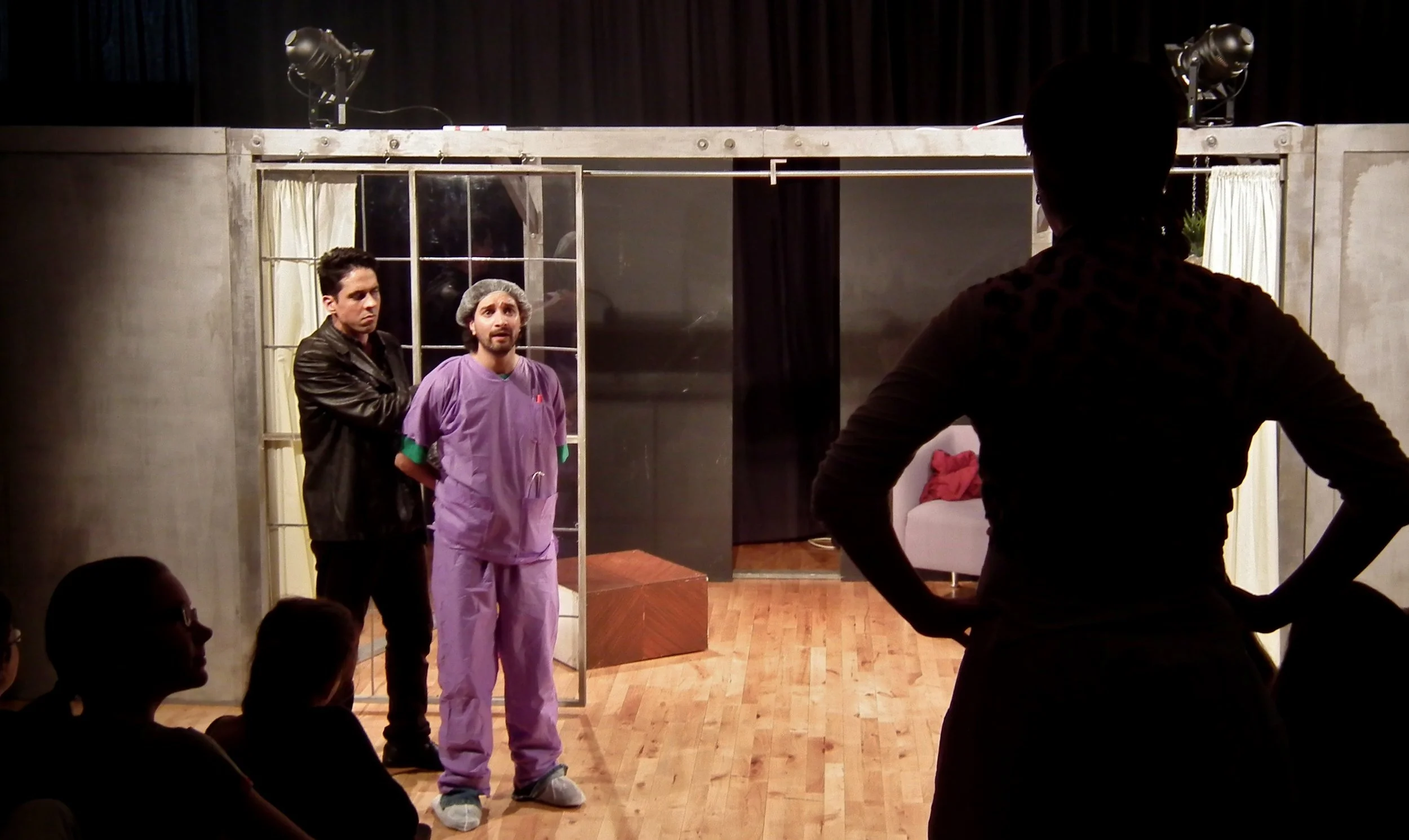
Victor Klein as Leandre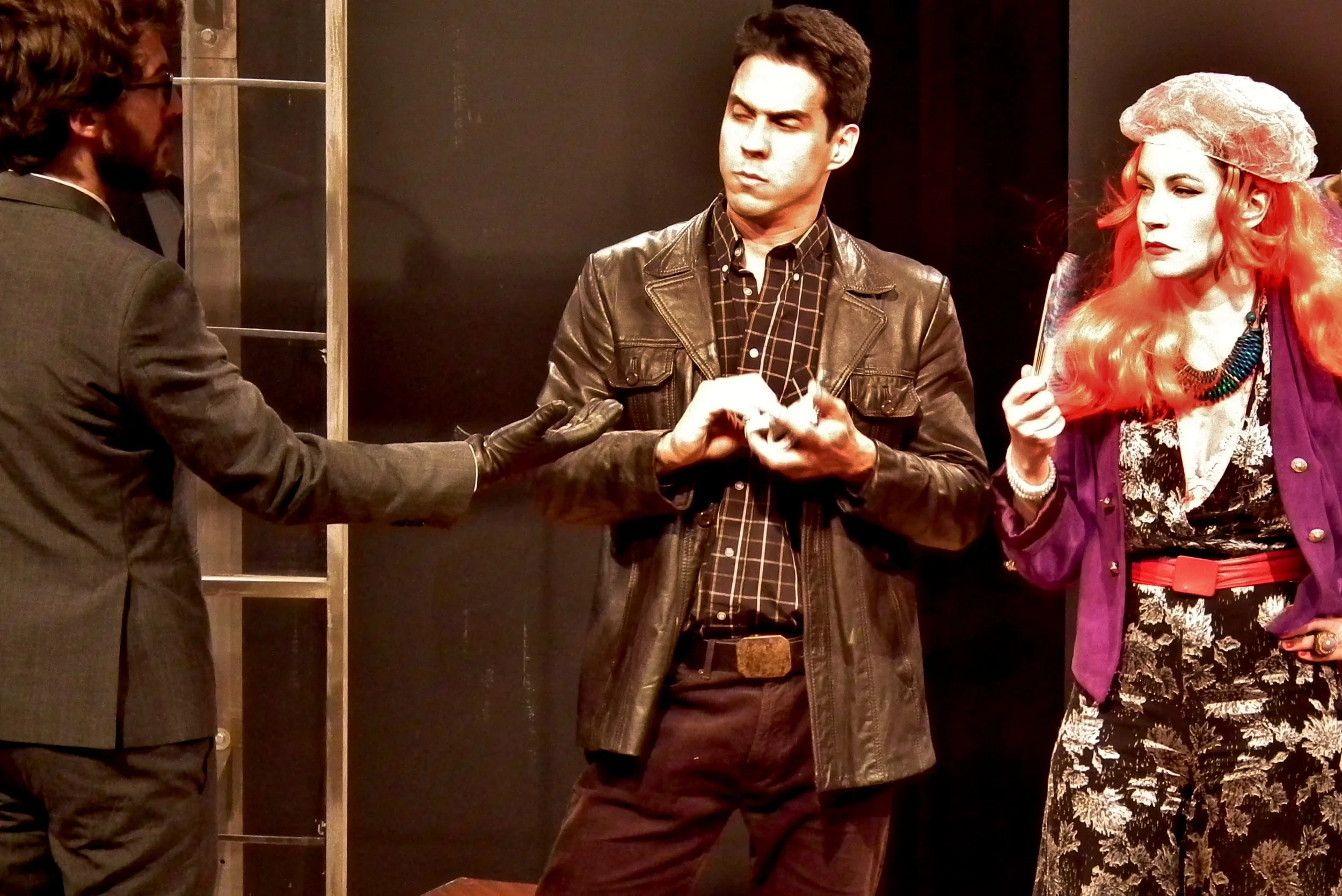
Victor Klein, Lula Suassunna, and Alexandra Bergeron